How Can You Tell If Your Pipes Are Clogged? 7 Signs Little Rock Homeowners Shouldn't Ignore
In Little Rock, we see both kinds of problems. Some clogs sit right under one sink and clear in minutes. Others start deep in the sewer line under your yard. Those take more than a plunger to fix.
This guide answers one question: how can you tell if your pipes are clogged? You'll learn simple signs you can check in a few minutes. If you catch a clog early, you can often avoid a backup and a messy cleanup.
First, we'll cover the seven warning signs. Then we'll show you how to tell one clogged drain from a main sewer line problem. After that, you'll see what causes clogs, which fixes are safe to try, and when to call a plumber.
How Can You Tell If Your Pipes Are Clogged?
- Slow drains: Water takes a long time to go down.
- Gurgling sounds: Drains or toilets bubble and gurgle.
- Bad smells: A sewer smell comes up from your drains.
- Water backing up: Water rises in a tub, shower, or floor drain.
- Toilet trouble: The toilet bubbles, or water comes up in the tub when you flush.
- More than one drain acting up: This often points to your main sewer line.
7 Signs Your Pipes Are Clogged
- Slow drains. Water pools in your sink, tub, or shower before it goes down. A drain that gets slower each week is building a clog inside the pipe.
- Gurgling or bubbling. You hear gurgling when water drains, or you see bubbles in the toilet. These sounds mean your drains are struggling to move water past a clog.
- Sewer smell. A rotten smell comes from your drains or your yard. Waste that sits in a clogged pipe gives off that odor.
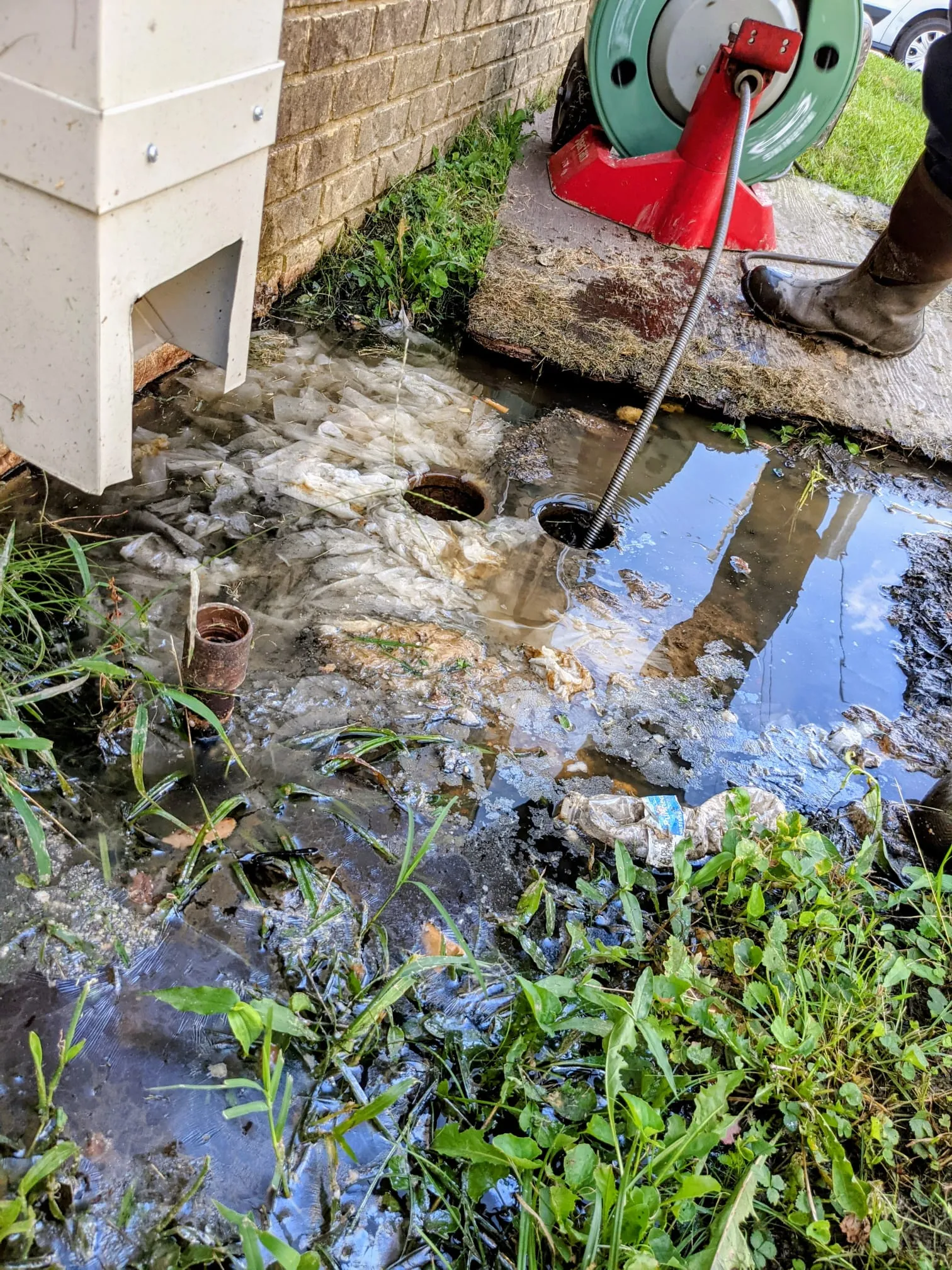
- Water backing up. Dirty water rises in your tub, shower, or floor drain. This means water has nowhere to go and is coming back into your home.
- Toilet backing into the tub. You flush, and water comes up in your tub or shower. First-floor toilets are often among the first fixtures to act up when your main line is blocked.
- Soggy spot in the yard. A patch of grass stays wet or extra green over your sewer line. This can mean a blocked or broken pipe is leaking underground.
- Drain flies. Tiny flies hang around your sink or shower drain. They feed on the gunk that builds up inside slow, clogged pipes.
Is It One Drain or Your Main Sewer Line?
One drain acting up. If only your bathroom sink is slow, the clog is likely close by. Hair, soap, and grease often build up right under that one fixture.
Several drains acting up. If your sink, tub, and toilet all drain slowly, the clog is likely in your main line. When drains all over your home act up at once, the clog is usually in the line they share.
Check your lowest drains. Water backs up at the lowest point first (source). Look at your first-floor shower, tub, or floor drain. Water rising there is a strong sign of a main line clog.
Try the flush test. Flush your toilet and watch the tub or shower. If the tub gurgles or water comes up, your main line is likely blocked.
| Symptom | Likely a single clog | Likely your main line |
|---|---|---|
| One sink or tub drains slowly | Yes | — |
| Several drains slow at the same time | — | Yes |
| Toilet flush makes the tub gurgle | — | Yes |
| Water rises in a floor drain or first-floor shower | — | Yes |
If your signs point to the main line, don't keep running water. Our main line stoppage service clears the blockage, and a camera sewer line inspection shows you what caused it.
What Are the Common Causes of Clogged Pipes?
In the kitchen
- Grease and cooking oil. It sticks inside your pipes and builds up over time.
- Food scraps. Rice, pasta, and peels swell or stick together in the drain.
- Coffee grounds. They don't break down and pack into a thick sludge.
- Hair. It's one of the top causes of clogs. It tangles and catches everything else.
- Soap and toothpaste. They leave a sticky film that builds up over time.
- "Flushable" wipes. Despite the label, wipes don't break down like toilet paper. They snag in pipes and cause backups (source).
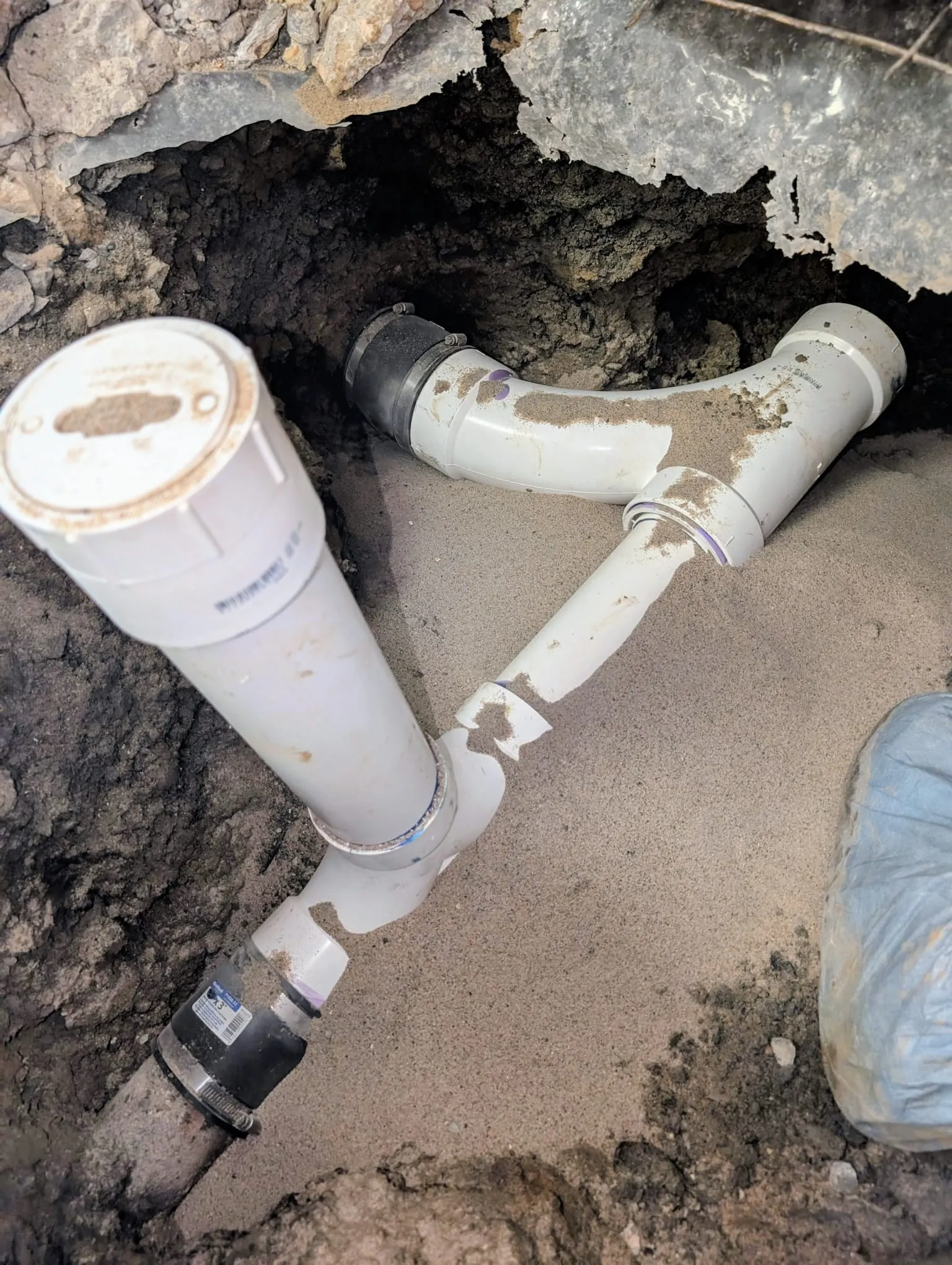
- Tree roots. Roots seek out water and grow into small cracks in your sewer line. Even a tiny crack gives them a way in (source).
- Older pipe. Orangeburg pipe, used from about 1940 to 1970, can flatten and collapse with age. Older clay pipe breaks easily and has weak joints that let roots in. If you live in an older neighborhood like the Heights, Hillcrest, or Midtown, find out if your sewer line was ever replaced. If not, ask us about sewer line replacement.
- Ground movement. Shifting soil, tree roots, and age can all shorten a sewer line's life. A sagging section lets waste settle and build into a clog.
Tip: Never pour grease down the drain.
The Little Rock Water Reclamation Authority (LRWRA) lists cooking grease as a leading cause of sewer blockages. Let grease cool, pour it into a can, and toss it in the trash. LRWRA offers free Can the Grease kits to help.How Do I Unclog My Pipes? (Safe DIY Steps)
- Use the right plunger. A flat cup plunger works on sinks and tubs. A flange plunger, with the extra rubber flap, fits toilets. Leave a little water in the basin so the plunger can seal, then push and pull hard.
- Clean the stopper or drain cover. Pull out your sink stopper or unscrew the shower drain cover. Hair and soap often collect right there. Wipe it clean and test the drain.
- Try a small hand snake. Feed the cable slowly into the drain and turn the handle. When you feel resistance, keep turning to grab the clog, then pull it out. It can pull out hair and gunk that a plunger can't move.
Skip the chemical drain cleaner.
The heat from these products can warp plastic pipes and weaken older metal ones (source). They can also splash back and burn your skin or eyes (source). On a stubborn clog, they may only loosen it and push it deeper into the pipe.Know when to stop. If the clog comes back within a few days, stop trying DIY fixes. The same goes if more than one drain is slow. Both point to a deeper problem a plunger can't reach.
Still clogged?
Our team handles clogged drain cleaning in Little Rock. We'll find the clog, clear it, and tell you what caused it.What Do Plumbers Use to Unclog Drains?
| Tool | What it does | When we use it |
|---|---|---|
| Power drain auger | A motor-driven cable cuts through clogs far down the line | Tough clogs in branch lines or the main line |
| Sewer camera | A small waterproof camera shows the inside of your pipe | Repeat clogs, or when we need to find the cause |
| Hydrojetter | High-pressure water scours grease, sludge, and roots off pipe walls | Heavy grease buildup or root intrusion |
| Excavator | Digs down to the damaged section of pipe | When the pipe is broken or collapsed |
Power drain augers reach clogs far past where a hand snake can go. They cut through the blockage so water can flow again.
A camera inspection shows what's really going on. We can see roots, cracks, sags, or a flattened pipe. In older lines like Orangeburg, we check with the camera first, since some cleaning tools can damage weak pipe. As we inspect, we tell you what we see, so you're never guessing.
Hydro jetting cleans the whole pipe, not just a hole through the clog. That helps keep grease and roots from building back up as quickly.
Sewer repair comes in when the pipe itself has failed. If the camera shows a break or collapse, the damaged section may need to be dug up and replaced. We'll walk you through what we found and your options before any digging starts.
When to Call a Plumber in Little Rock
- The same drain clogs again within a few days or weeks.
- More than one drain is slow or backing up at the same time.
- You smell sewage, or dirty water comes up in a tub, shower, or floor drain.
- Your home was built before the 1970s and still has its original sewer line.
- Stop running water. Hold off on the dishwasher, washing machine, showers, and flushing. More water only adds to the backup.
- Find your main water shutoff. It's often near your water heater, in a utility closet, or where the water line enters the house. If water starts rising, turn it off.
Seeing the signs?
Reach out to your Little Rock plumber at Diamond State Plumbing. We'll get to the root of the problem, not just clear it for now.Common Questions
You are. The Little Rock Water Reclamation Authority (LRWRA) treats the sewer service line as the property owner's to maintain, repair, and replace. LRWRA handles the public sewer main.
Yes, LRWRA's Sewer Service Line Replacement Program reimburses eligible homeowners up to $2,500. It covers full replacement of the sewer service line on single-family homes. You need a permit before work starts, and LRWRA inspects the finished line.
No, wipes don't break down in the sewer the way toilet paper does. LRWRA warns they can clog pipes and cause toilets and sinks to overflow. Toss them in the trash instead.
A gurgling toilet usually means your drains are struggling to get water past a clog. If other drains act up too, or the tub backs up when you flush, the clog is likely in your main line. Have it checked before it turns into a backup.
A clog that keeps coming back usually has a deeper cause. Roots, a sagging pipe, or a cracked line can trap waste again and again. A camera inspection lets us find the cause so we can fix the real problem.
Get In Touch
Have any questions? Contact us today for expert services in Little Rock and neighboring communities. Let us handle your plumbing needs!