Signs Your House Has Hidden Plumbing Problems in Little Rock (and What to Do Next)
This guide covers the signs a house has hidden plumbing problems. You'll learn what to look, listen, and smell for, so you can catch trouble while it's still cheap to fix.
Small leaks add up. According to EPA WaterSense, the average home's leaks can waste more than 9,300 gallons of water a year. That water shows up on your bill. It can also soak into your floors, walls, and foundation.
We're Diamond State Plumbing, a family-run team of licensed plumbers in Little Rock. Below, we'll walk through the warning signs, how long pipes last, and what insurance usually covers. We'll also help you decide when it's time to call a plumber.
What Are the Signs of Hidden Plumbing Problems in a House?
- A water bill that goes up when your water use hasn't changed
- A water meter that moves when every tap is off
- Musty smells, mold, or damp spots on walls, ceilings, or floors
- Warm spots on the floor, which can mean a slab leak
- Low water pressure at more than one faucet
- Gurgling drains or several slow drains at once
- Sewer smells inside or outside your home
- Stained, bubbling, or cracked paint and drywall
- Rusty or brown water from your taps
What Counts as a Plumbing Issue?
A hidden plumbing problem is one you can't see. It's inside your walls, under your concrete slab, in your crawlspace, or buried in your yard. You usually find out from the damage it causes, not from the leak itself.
| Visible problem | Hidden problem |
|---|---|
| A dripping faucet | A pinhole leak behind your drywall |
| A wet spot under the sink | A slow drip in the crawlspace soaking the subfloor |
| A slow sink drain | A sewer line clogged underground in your yard |
| A running toilet | A cracked water line under your slab |
Hidden problems cost more because they run longer before anyone notices. A drip under a sink gets fixed the day you see it. A leak behind a wall can soak drywall, flooring, and framing for weeks or months.
That's why small signs are worth checking. A quick look now can save you from a much bigger repair later.
Hidden Water Leak Signs You Can See, Hear, and Smell
What you might see
- Brown or yellow water stains on ceilings or walls
- Paint that bubbles, peels, or looks swollen
- Warped, cupped, or loose floorboards
- Mold or mildew in corners, closets, or under sinks
- Puddles or soggy soil near your foundation
- Running water when every faucet is off
- Hissing or dripping sounds inside a wall
- A toilet that refills when no one has flushed
- A musty, damp odor that won't go away
- A sewer smell in a bathroom or out in the yard
- Warm spots on the floor
- Damp carpet with no spill to explain it
- Drywall that feels soft when you press it
That's why a stain is worth a call, even if it looks small and dry.
Signs Hiding in Your Water Bill and Water Pressure
- Higher bill, same habits. Compare your bill to the same month last year. If it's higher and nothing changed at home, water may be leaking somewhere.
- Low pressure at more than one faucet. One weak faucet is often just a clogged aerator. Low pressure across the house can mean a supply line leak or pipes narrowed by corrosion.
- Rusty, brown, or cloudy water. This often points to aging galvanized pipes rusting from the inside.
- A water heater that runs all the time. If it keeps kicking on when no one is using hot water, a hot water line may be leaking under your slab.
Try the 15-minute meter test from Central Arkansas Water
- Turn off every faucet, toilet, and water appliance in your home.
- Find your water meter, usually in a box near the street.
- Note where the dial is.
- Wait about 15 minutes without using any water.
- Check the dial again.
If the dial moved, water is going somewhere. Check your toilets, faucets, and hose connections first. If those are all dry, you may have a hidden leak in a wall, under the slab, or in the line running through your yard.
Signs of a Slab Leak and Sewer Line Problems in Older Little Rock Homes
Signs of a slab leak
- Warm spots on your floors
- New cracks in the slab, tile, or flooring
- Water pooling near your foundation
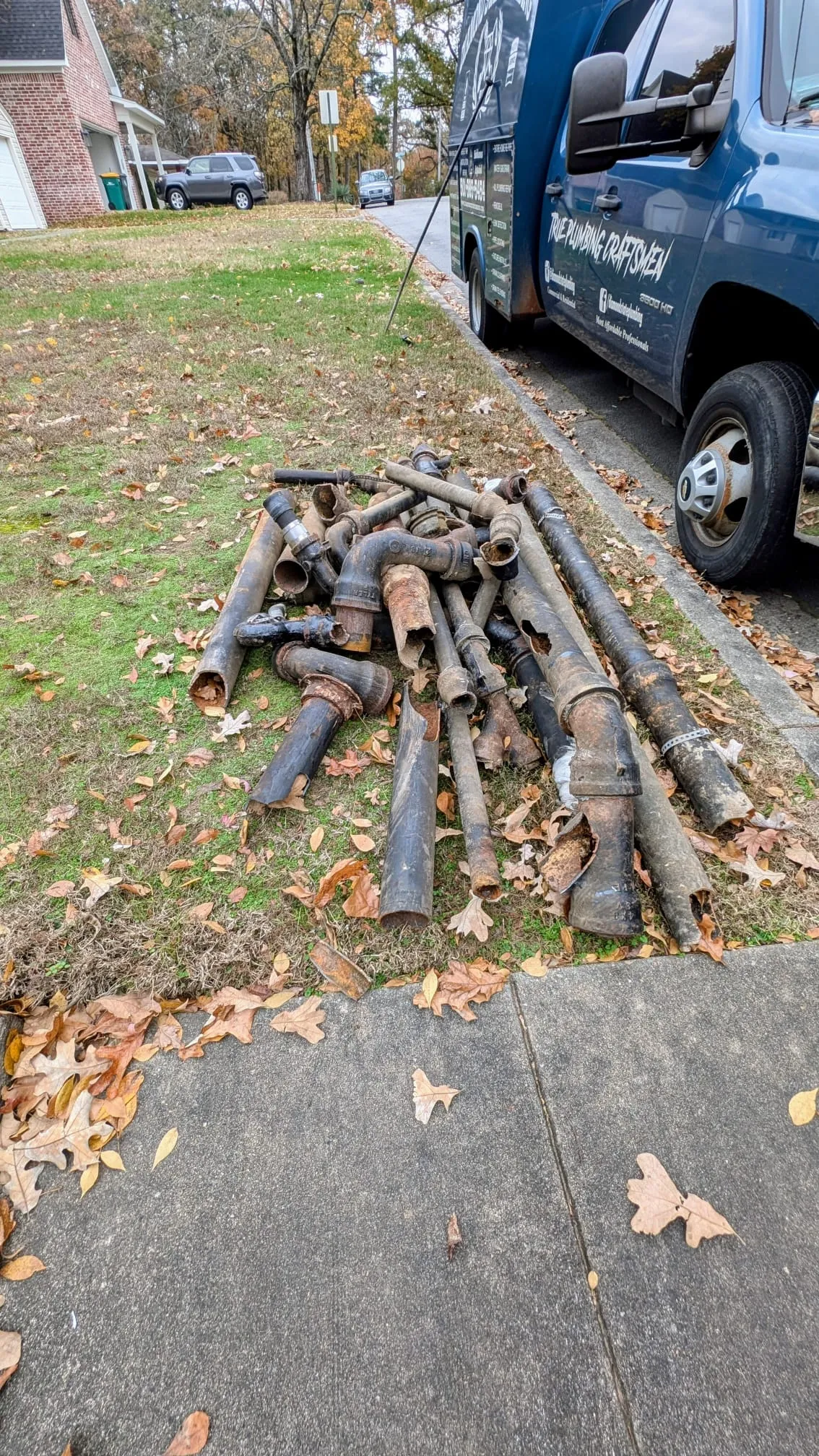
The sewer line is another weak spot. Homes built from about 1945 to 1972 may have Orangeburg pipe, made from wood pulp and tar. It was sold with a 50-year life, so any still in the ground is past it. Over time it can soften, flatten, and collapse.
Tree roots make it worse. Roots from mature oaks and pines find the water in old sewer joints and push their way in.
Signs of sewer line trouble
- Several drains running slow at the same time
- Toilets that gurgle when you run the sink or shower
- Sewer smells in your yard
- Soggy or extra-green patches of grass over the sewer line
Seeing these signs? Book a sewer camera inspection to see inside your line. For warm floors or new cracks, ask about our slab leak repair.
How Long Do Plumbing Pipes Last?
These ranges come from InterNACHI's life expectancy chart for homes, plus what's known about older sewer pipe.
| Pipe material | Used for | Typical life | How to spot it |
|---|---|---|---|
| Copper | Water supply | About 70 years | Orange-brown metal, may have green spots |
| PEX | Water supply | About 40 years | Flexible plastic tubing, often red, blue, or white |
| Galvanized steel | Water supply | Varies, often fails early from rust | Dull gray metal with threaded joints |
| Cast iron | Drains | 50 to 60 years underground | Heavy black or dark gray pipe |
| PVC or ABS | Drains | 50 to 80 years | White or black plastic pipe |
| Orangeburg | Sewer line | Sold with a 50-year life, can fail much sooner | Black fiber pipe, usually only seen by camera |
You can often tell what you have just by looking. Check the pipes near your water heater, under your sinks, and in your crawlspace if you have one.
Your home's build year is a good shortcut too. If your house was built before the 1970s, it may still have galvanized supply pipes, cast iron drains, or an Orangeburg sewer line.
There's no set schedule for replacing plumbing. It depends on your pipe material, its age, and whether you're seeing problems. Pipes near the end of their range deserve a closer look, even if nothing is leaking yet.
Signs Copper Pipes Need Replacing (and When to Replace Plumbing in a House)
Signs your copper pipes are wearing out
- Green or blue spots on the outside of the pipe
- Pinhole leaks, even small ones
- Dents, flaking, or pitting on the surface
- Water that tastes like metal
- Rust-colored or brown water
- Water pressure that keeps dropping over time
| What you're seeing | Pipe age | Likely fix |
|---|---|---|
| One leak, rest of the pipe in good shape | Any age | Repair the leak |
| Green spots or pitting, no leaks yet | Near the end of its range | Inspection and a plan for later |
| Two or more leaks on the same line | Near or past its range | Replace that section |
| Leaks in several areas, rusty water, low pressure | Past its range | Full repipe |
Before we recommend anything, we find the root of the problem. Angel, our owner and master plumber, holds the whole team to that standard. We show you what we found and explain your options as we go.
Already have a repiping quote from someone else? Bring it to us. We'll tell you straight whether we can beat it or if their price is already fair. We also offer financing on every job.
If your home is showing more than one of these signs, see our repiping for Little Rock homes.
Will Homeowners Insurance Pay for Plumbing Issues?
| Usually covered | Usually not covered |
|---|---|
| A pipe that bursts without warning | A slow leak that went on for weeks or months |
| A washing machine hose that suddenly breaks | A leaky toilet that was never fixed |
| A frozen pipe that bursts in a heated home | Old pipes that corroded over time |
| Water damage from a ruptured water heater | Tree roots growing into your sewer line |
Even when the water damage is covered, the pipe repair itself often isn't. Your policy may pay to fix the wall and floor, but not the broken pipe.
This is another reason to act on small signs. If an insurer decides a leak ran for a long time, it may count as gradual damage. Gradual damage claims are often denied.
If you find a leak, take photos of the damage and the source before anything gets fixed. Keep the written report from your plumber, too. Both help if you file a claim.
Every policy is different, so check yours or call your agent. Some insurers offer add-ons for sewer or service line damage. This guide isn't insurance advice.
Can You Sell a House With Plumbing Issues? (Plumbing Inspection Before Buying a House)
According to the Arkansas Real Estate Commission, state law doesn't require every seller to disclose a home's condition. Still, most home sales here use the Arkansas Realtors Association's Seller Property Disclosure form. It asks close to 60 questions about the home's condition. Hiding a problem you knew about can still lead to legal trouble, so talk with your agent about what to share.
If you're selling
- Get a plumbing inspection before you list
- Fix small problems early so they don't cut into your offers
- Know what's wrong before a buyer's inspector finds it
- A standard home inspection doesn't have to include a sewer scope
- Ask for a sewer camera inspection on any home built before the 1980s
- Find out what the supply pipes and drains are made of before you close
When to Call a Plumber in Little Rock
Call now
- Water is actively leaking or spraying
- Sewage is backing up into a tub, shower, or floor drain, a sign of a main line stoppage
- You smell gas. Leave the house first. Once you're outside, call 911 and Summit Utilities
Call soon
- You've noticed two or more signs from this guide
- Your meter moved during the 15-minute test
- Your pipes are near the end of their life range
For an active leak, shut off your water at the main valve while you wait for help.
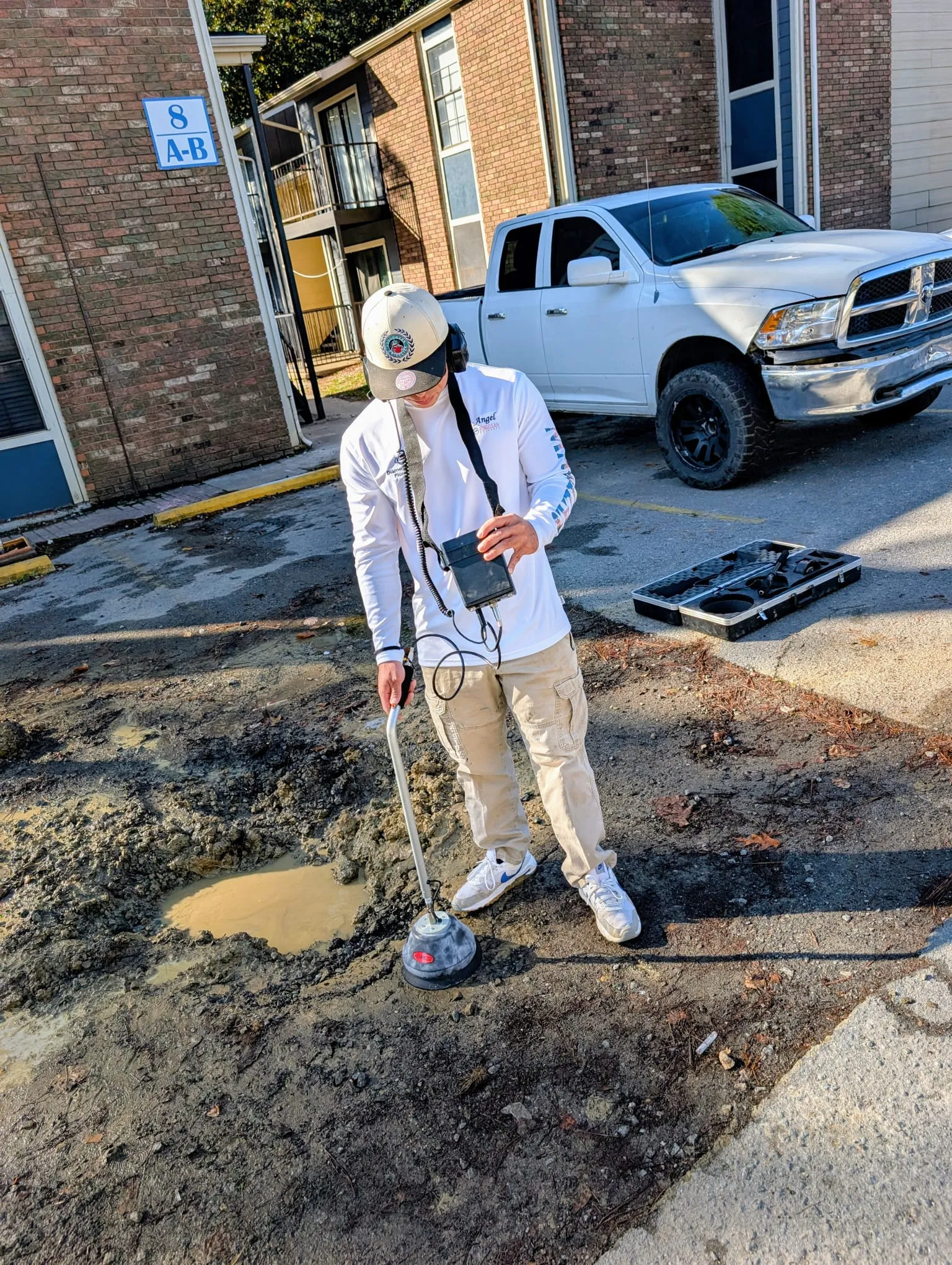
A leak detection or camera visit is simple. We trace the problem to its source before we open a wall or dig. Then we show you what we found and walk you through your options.
Diamond State Plumbing is family-owned. Angel and his brothers, David and Eloy, are licensed, background-checked plumbers with 25 years between them. Angel has kept the same phone number since he started in 2018. We offer financing on every job.
Call Diamond State Plumbing at 501-585-5454, your local plumber in Little Rock. You can also read our reviews on our Google Business Profile.
Common Questions
Most house pipes last 40 to 80 years, depending on the material. Copper water lines last about 70 years, and PEX lasts about 40. Cast iron drains last 50 to 60 years underground. Galvanized pipes often fail sooner because they rust from the inside.
There's no set schedule for replacing plumbing. It depends on your pipe material, its age, and whether you're seeing problems. A single leak can often be repaired. Repeat leaks on the same line usually mean it's time to repipe.
The most common signs of a slab leak are warm spots on the floor, new cracks in your flooring, and water pooling near your foundation. A water heater that runs all the time can also point to a hot water line leaking under the slab. A leak detection visit can confirm it.
Yes, a hidden leak can cause mold behind walls and under floors. Trapped moisture gives mold a place to grow. A musty smell that won't go away is often the first sign.
No, a standard home inspection doesn't have to include the sewer line. A sewer camera inspection is usually a separate service. If you're buying a home built before the 1980s, ask for one before you close.
Turn off all the water in your home, then watch your meter for about 15 minutes. If the dial moves, water is leaking somewhere. Check your toilets, faucets, and hose connections first.
Get In Touch
Have any questions? Contact us today for expert services in Little Rock and neighboring communities. Let us handle your plumbing needs!