
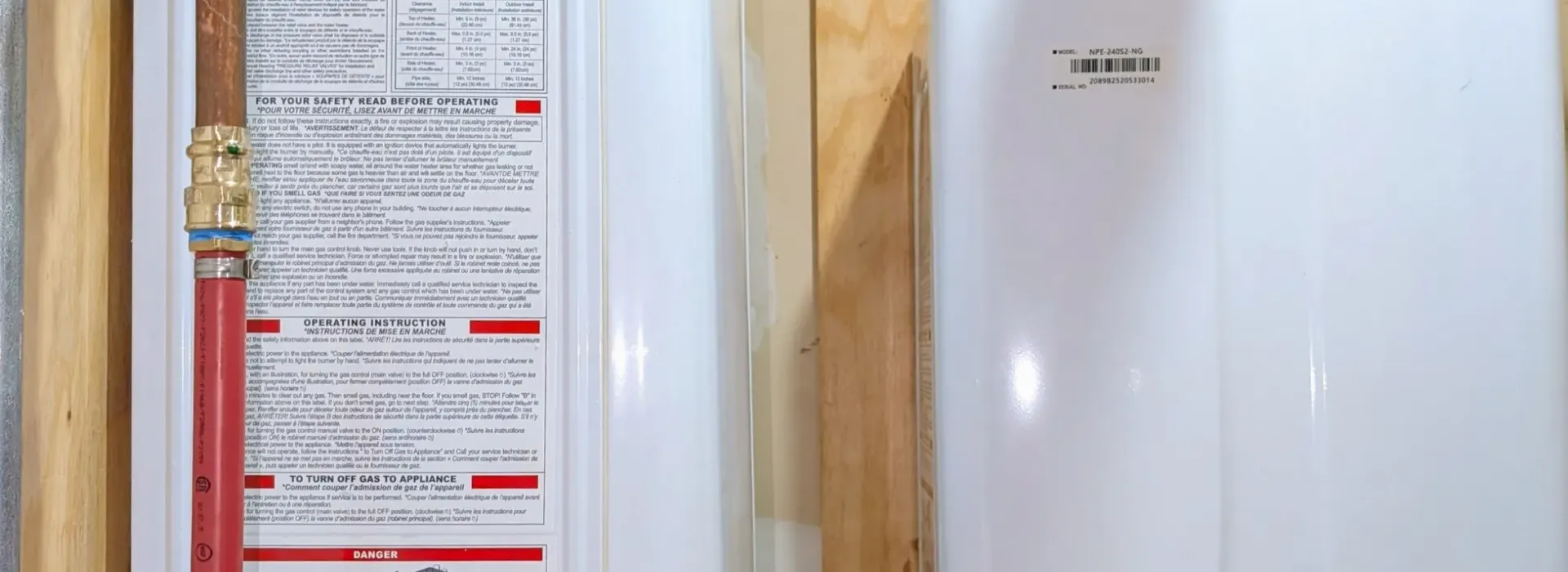
Tankless Water Heater Installation in Little Rock, AR
Ready to switch to tankless? Call Diamond State Plumbing at 501-585-5454. We're open Monday through Friday, 8 AM to 5 PM, and we offer financing on every job.
A tankless unit heats water only when you turn on the tap. When it's sized right for your home, it doesn't run out the way a tank does. It also costs less to run.
We handle tankless water heater installation in Little Rock, including swapping out old tanks for tankless units. We work in older homes in Hillcrest, the Heights, and downtown, and in newer homes in Chenal Valley.
We take weekday visits from 8 to 5, and we offer financing on every job. As your local plumber, we explain your options before any work starts. You'll know what we're doing in your house the whole time.
How Does Tankless Water Heater Installation in Little Rock Work?
- We count the fixtures you run at the same time and size the unit to match.
- We check your gas line, venting, and power.
- We pull the City of Little Rock permit.
- We drain and remove your old tank.
- We mount the new unit and connect the water, gas or power, and venting.
- We test the flow, the heat, and every connection for leaks.
- We show you how to flush the unit and care for it.
Signs Your Home Needs a Tankless Upgrade
Watch for these signs in your home:
- Rusty or cloudy water from the hot tap only
- Water pooling around the base of the tank
- Hot water running out faster than it used to
- Rumbling or banging sounds when the tank heats
- Showers and laundry competing for hot water at the same time
Noises and shorter hot water often come from sediment. It settles at the bottom of the tank and hardens over time. That buildup cuts how much hot water the tank can hold.
Small white bits clogging your faucet screens point to a different problem. Some tanks built in the mid-1990s used a plastic dip tube that breaks apart with age. When it fails, you run out of hot water fast.
If your tank sits in the attic, a leak can reach the ceiling below. A small leak can also mean a bigger failure is on the way.
If you live in an older home in Hillcrest or the Heights and your family has grown, your tank may not keep up. A tankless system heats water as you use it. Sized right, it won't run out the way a tank does.
Not every sign means you need a new heater. Some problems are a simple fix. We check the tank first and tell you straight whether to repair it or replace it.
Tankless vs Tank: What Little Rock Homeowners Should Decide
Here's how the two compare:
| Tank | Tankless | |
|---|---|---|
| Space | Large tank on the floor or in the attic | Small unit mounted on a wall |
| Lifespan | 10 to 15 years | More than 20 years |
| Heat loss | Keeps water hot all day, even when unused | Heats water only when you turn on a tap |
| Energy savings | Baseline | 24% to 34% more efficient in lower-use homes; 8% to 14% in high-use homes |
| Upfront cost | Lower | Higher |
| Hot water supply | Runs out when the tank empties | Steady, as long as it's sized for what you run at once |
| Power outage | Depends on the model | Needs power to run; battery backup available |
A few things point toward tankless being the right fit:
- Your household runs several showers or appliances at once
- You want to free up space in a utility closet, garage, or attic
- You're replacing a tank that's already near the end of its life
- You plan to stay in your home for years and want a longer-lasting unit
In Little Rock, the water coming into your home is colder in winter. Colder water takes more work to heat, so the unit puts out less hot water per minute. We size your unit for the coldest water it will see, not the warmest.
We look at your household's hot water demand and give you a straight answer on which system fits your home best. If a tank still makes more sense for you, we'll tell you.
Sizing Your Tankless Unit for Every Shower in the House
We size your unit by counting what runs at the same time, not by the number of bathrooms. Here's a simple example:
- One shower: about 2.5 gallons per minute
- One kitchen faucet: about 0.75 gallons per minute
- Total at once: about 3.25 gallons per minute
We also measure how much the unit has to heat the water. Most homes set hot water to about 120 degrees. The colder the water coming in, the harder the unit works. In Little Rock, winter water runs colder, so a unit that keeps up in July can fall short in January.
One tankless unit can run a whole house when it's sized right. In larger homes, even the biggest gas unit may not cover every fixture at once. In that case, we install two units that share the load.
Long pipe runs bring a separate problem. A tankless unit heats water in seconds, but that hot water still has to travel to your tap. If your sink is 50 feet away, you could wait about 90 seconds.
A recirculation pump fixes that wait. You press a button or walk past a sensor near the fixture. The pump pulls the cooled water in the line back to the heater, so hot water reaches you faster.
Know the Trade-Offs Before You Switch
| Trade-off | What it means for you | What helps |
|---|---|---|
| Higher upfront cost | The unit costs more than a tank. Installation can cost more if your gas line or vent needs changes. | We explain every change before we start. Financing is available on every job. |
| Needs power to run | The unit runs its controls and ignition on electricity. No power means no hot water. Ice storms have cut power to tens of thousands of customers in Pulaski County. | A battery backup can keep the unit running for days. |
| Freeze protection needs power | The unit protects itself from freezing only while it has power and gas. The pipes to it aren't covered. | Exposed pipes to garage and outdoor units need insulation. A drain-down kit can empty an outdoor unit if power fails. |
| Flow limit | The unit heats a set amount of water per minute. Too many fixtures at once can turn the water lukewarm. | We size the unit for everything you run at the same time. |
| Very low flows | A barely open hot tap may not trigger the unit to start heating. | Lowering the temperature setting a few degrees usually fixes it. |
Power outages are the trade-off we talk through most. If your area loses power often, ask us about a battery backup when you plan your install.
If these downsides outweigh the benefits for your home, a new tank may be the better fit. We'll walk through both options with you and let you decide.
Preparing Your Home for Tankless Installation
Here's what to have ready before our crew arrives:
- Clear the area around your current water heater
- Decide where you'd like the new unit to go
- Make sure we can reach your utility closet, garage, or attic
- Let us know if your home has an older gas or electric setup
| What we check | Why it matters |
|---|---|
| Gas line size | Many homes have a 1/2-inch gas line. Most tankless units need a 3/4-inch line unless the run from the meter is short. |
| Venting | A tankless unit needs its own vent, built from parts the manufacturer approves. |
| Power | The unit plugs into a standard outlet. If there isn't one close by, we plan for it. |
Switching from a tank often means upsizing the gas line and changing the vent. We check this ahead of time so your install goes smoothly, without surprises on install day.
If you're in West Little Rock and your water heater sits in the attic, the new unit doesn't have to go back up there. A tankless unit's small size gives you more choices. We can mount it in a garage or on an outside wall.
How Our Team Installs Your Tankless Water Heater
We follow the same process on every job so nothing gets missed:
- We pull the City of Little Rock plumbing permit, plus a gas permit when gas work is involved
- We shut off the water and the power or gas to the old unit
- We drain and disconnect the old water heater
- We remove the old unit and mount the new tankless system
- We connect the water lines, gas or electric, and venting
- We check for leaks and confirm every connection is tight
- We test the system before we leave
Code and the manufacturer's install instructions set the venting and clearance, and we follow both on every job. The city requires an inspection, so the work gets a second set of eyes.
You get a plain explanation of what we're doing at each step. You're never left guessing what's happening in your own house.
Checking Your New Tankless System Works Right
Before we call the job done, we check:
- Hot water flow at the tap
- Water pressure through the system
- All gas, electric, and water connections for leaks
- That the unit heats properly with several fixtures running at once
Then we walk you through the controls. We show you how to set the water temperature and where the inlet filter sits. If a low-flow faucet ever runs cold, you'll know how to lower the setting a few degrees to fix it.
Central Arkansas Water is soft, at about 1.0 to 1.7 grains per gallon. Even soft water carries trace minerals, and buildup can affect flow over time. We test your system with this in mind.
If anything's off, we fix it before we pack up, not after.
Keeping Your Tankless Water Heater Running for Years
Central Arkansas Water is classified as soft, but even soft water carries trace minerals. Buildup inside your unit slows it down and shortens its life if it's never flushed. Over time, it can wear away the inside of the heating chamber. Flushing clears out this buildup and keeps your system working right.
Here's what regular care looks like:
| Task | How often | What it does |
|---|---|---|
| Flush the unit | At least once a year | Clears mineral buildup from the heating chamber |
| Clean the inlet filter | Check it regularly, or sooner if flow drops | Removes debris that slows water into the unit |
We offer water heater maintenance across Little Rock, including Cammack Village.
Licensed Little Rock Plumbers Who Explain Your Options First
Angel learned the trade through an apprenticeship with the Arkansas Construction Education Foundation. He spent years as the plumber other companies called when a job turned into a real problem. In 2018, he started his own company, taking side jobs after work in his personal car. He's kept the same phone number since day one, so you can always find him.
Here's what that means when you call us about a tankless install:
- We explain your options first. You hear what we found and what we recommend before any work starts.
- We'll check another quote. Getting a price from someone else? Bring it to us. We'll tell you straight whether we can beat it or whether their price is already fair.
- Financing on every job. A tankless unit costs more up front, so we make it easier to pay over time.
- We tell you what we're doing as we go. You're never guessing about what's happening in your own house.
Common Questions
We don't recommend it. A tankless install involves gas lines, venting, water lines, and power, and tankless makers such as Rinnai recommend a licensed plumber. The work also needs a City of Little Rock permit and inspection.
Yes, if the job involves gas or venting changes, which many tankless installs do. We pull the city plumbing permit, plus a gas permit when gas work is involved.
Most tankless units last more than 20 years with a yearly flush. Water quality matters, and Central Arkansas Water is soft. Your usage and regular care also affect how long yours lasts.
Yes, if it's sized for the fixtures you run at the same time. In larger homes, one unit may not cover every shower and appliance at once. In that case, we install two units that share the load.
Often, yes. Many homes have a 1/2-inch gas line, and most tankless units need a 3/4-inch line unless the run is short. We check your line size, pipe length, and other gas appliances before install day.
It depends on the model, and we follow the manufacturer's manual for yours. One common manufacturer's manual calls for at least 12 inches below the unit. It also needs 24 inches of open space in front for service.

Why Local Matters
For Your Plumbing



Why Local Matters
For Your Plumbing
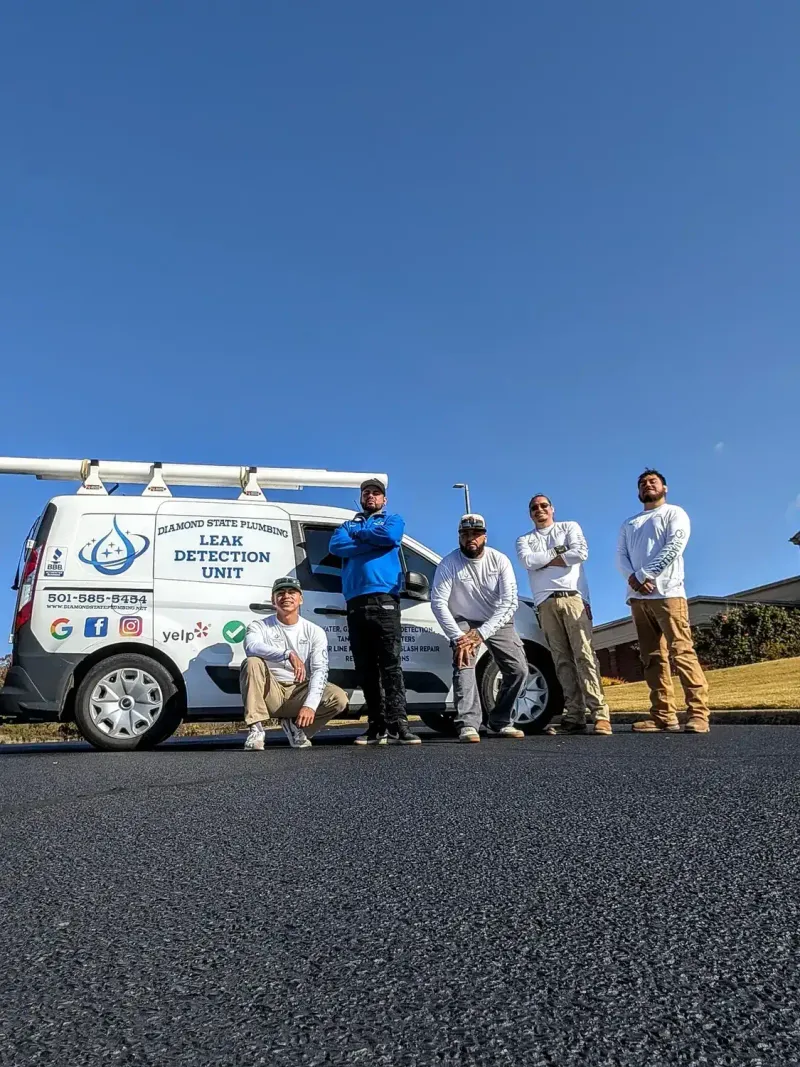
You could call a big national chain. They'll probably charge you more and send someone who doesn't know Little Rock. Local plumbers understand that homes in Pulaski Heights have different plumbing than new builds in West Little Rock. They know which neighborhoods have older plumbing prone to mineral buildup and which areas tend to have foundation shifts that affect plumbing.
When you call a local company, you get someone who answers the phone and can usually tell you right away what's probably happening and when they can get there. No automated system. No waiting on hold for 20 minutes.
Response times are better too. A local plumber is 15 minutes away, not coming from another city. If you've got a burst pipe or sewage backing up, those minutes matter. Plus, local companies know the city inspectors, understand Little Rock's specific codes, and can get permits processed faster. When you need plumbing work done right and done quickly, local is the way to go.
 Licensed, Bonded & Insured
Get In Touch
Have any questions? Contact us today for expert services in Little Rock and neighboring communities. Let us handle your plumbing needs!