
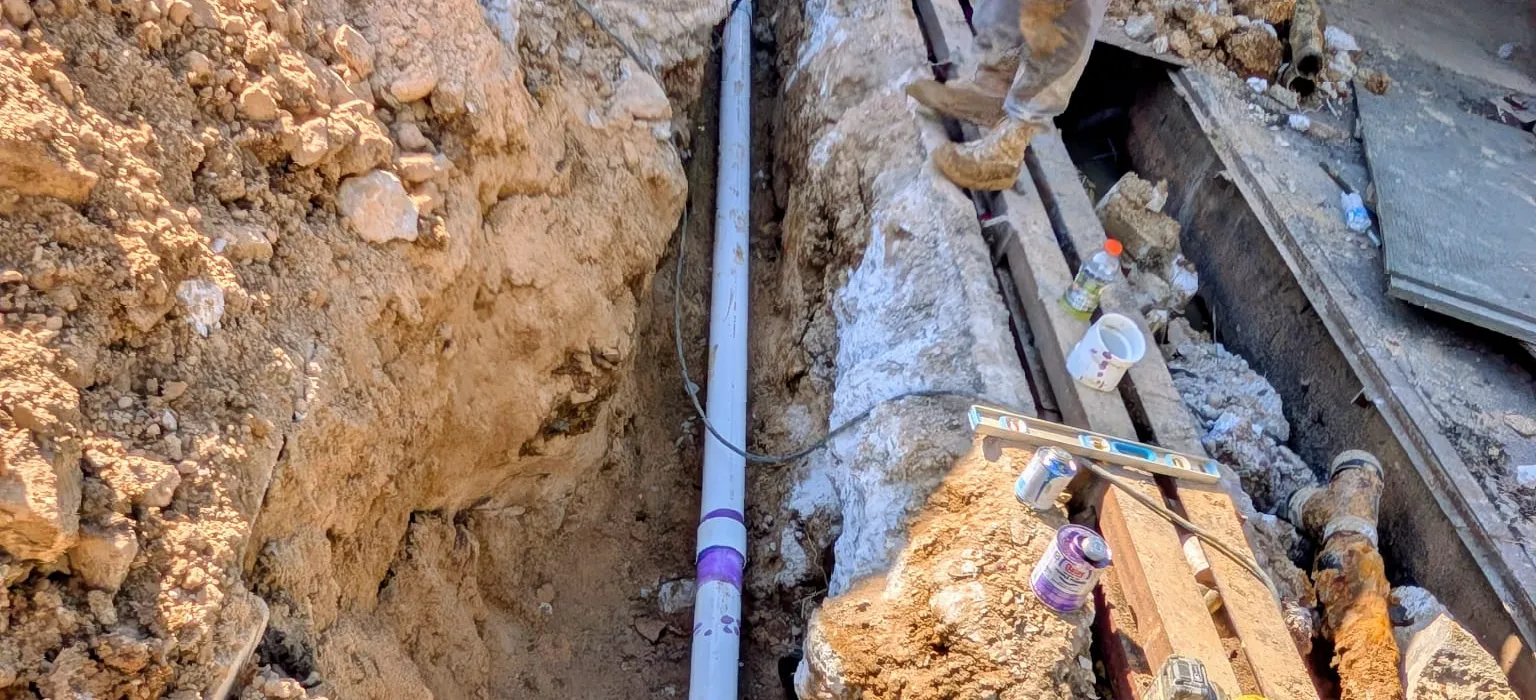
Sewer Line Cleaning in Little Rock, AR
Slow drains or a backed-up main line? Diamond State Plumbing clears sewer lines across Little Rock with cabling, hydro jetting, and a camera check of the full line. We're open 8AM to 5PM, Monday through Friday. Call 501-585-5454 to schedule your visit.
If your sewer line is backed up, we can often get to you the same day on weekdays. Before we start, we tell you what caused the clog and how we'll fix it. Our licensed plumbers clean the full line, not just the spot where it stopped. That way, you know exactly what's going on in your own home.
Signs That Your Sewer Line Is Clogged Or Broken
Look for these signs:
- Several drains running slowly at the same time
- Gurgling in toilets or tubs
- Sewage odor around your drains
- Water backing up in the lowest drain in your house
| What you notice | What it usually means |
|---|---|
| One sink or tub drains slowly | A clog in that fixture's drain |
| Several drains slow down at once | A clog in the main sewer line |
| A toilet gurgles when other fixtures run | The main line is partly blocked |
Many homes in Hillcrest date to the early 1900s, when clay sewer pipe was the standard in Little Rock. Downtown Little Rock is older still, and some of the city's sewer system dates back to the 1800s. If your line has never been replaced, it may still be clay. Over time, roots get in through its cracked joints and cause many of the signs above.
Do I Call a Plumber, or Do It Myself?
| Do it yourself | Call a plumber |
|---|---|
| One sink or tub is draining slowly | Several drains are slow at the same time |
| The clog is near the drain opening | The clog is deep in the main line |
| A plunger or store snake clears it | A plunger and store snake don't help |
| Only one fixture is affected | Water is coming up in the lowest drain |
Skip chemical drain cleaners, too. They don't clear main line clogs, and they can damage older pipe. That includes the cast iron still found under many established Little Rock homes.
What To Do Before The Plumber Arrives
Until we arrive:
- Don't flush toilets.
- Don't run the dishwasher or washing machine.
- Don't take a shower or bath.
- Don't run water in the sinks.
Backups can happen outside, too. If sewage comes up in your yard, keep children and pets away from that area. Older homes, like the 1940s houses in Cammack Village in the middle of Little Rock, are more likely to have aging lines. When we get there, we'll walk the property with you.
How Little Rock Plumbers Clean A Sewer Line
Sewer line cleaning removes what has built up inside your pipe over the years. That includes tree roots, grease, and debris.
| Method | What it does | Best for |
|---|---|---|
| Cabling | A motorized cable cuts roots and breaks up clogs | Root clogs and older, fragile pipe |
| Hydro jetting | High-pressure water scours the pipe walls | Grease and buildup in sound pipe |
Here's how sewer line cleaning in Little Rock works with our team:
- We ask which drains are slow and how long it's been happening.
- We find and open your sewer cleanout.
- We choose a cable or a hydro jetter based on your pipe's condition.
- We clear the full line, out to the city main.
- We run a camera through the line to check for cracks and roots.
- We show you the footage and explain your next steps.
How We Make Sure Your Line Is Completely Clear
This step matters most in the Heights and other older parts of Little Rock. The Heights began as a suburb in the 1890s, so many lines there may still be clay. Roots get in through cracks that are already there, then widen them over time (source). Cleaning clears the roots, but it can't repair the crack.
| What the camera shows | What it means for you |
|---|---|
| Clean, solid pipe | Cleaning should hold |
| Roots at a joint | The joint has failed, and roots will likely grow back |
| Broken or separated joints | The pipe needs repair |
| A collapsed section | That part of the line needs replacement |
When Cleaning Isn't Enough: Repair, Replacement, and LRWRA Help
How long your line lasts depends on what it's made of:
| Pipe material | What to expect |
|---|---|
| Orangeburg (1940s to 1960s) | About 50 years in ideal conditions, then it bends out of shape |
| Clay | Joints crack with age and let roots in |
| Cast iron | Breaks down and rots out over time |
| PVC | Can last 100 years or more |
If you need a full replacement in Little Rock, LRWRA's Sewer Service Line Replacement Program may help. It reimburses up to $2,500 for a qualifying full replacement on a single-family home. LRWRA looks at your pipe's age, material, and condition to decide if you qualify. We also offer financing on every job.
How To Keep Your Sewer Line Clear For Longer
Mature trees in older Little Rock neighborhoods are one of the biggest reasons lines clog again. Roots grow toward moisture and find their way into any crack or loose joint. Once they're in, they grow back after each cleaning.
| Your line | How often to clean |
|---|---|
| Roots found on camera | Every year or two |
| No roots found | We set a schedule after a camera check |
Your Sewer Line, Your Cleanout, and Who Owns What in Little Rock
Little Rock also splits water and sewer between two utilities:
| Who | What they handle |
|---|---|
| Central Arkansas Water | Your drinking water and your bill |
| LRWRA | The public sewer mains and treatment |
| You | The sewer line from your house to the main |
Check your insurance, too. A typical homeowner's policy doesn't cover damage from a sewer backup. You usually need a separate endorsement, so ask your agent.
How Can You Tell If You Need Sewer Line Cleaning in Little Rock, AR?
| Cleaning is likely the fix | You may need more than cleaning |
|---|---|
| Several drains slow down at once | Roots return at the same joint |
| Grease or debris has built up | The camera shows cracks or a collapse |
| The camera shows solid pipe | Your line is Orangeburg pipe |
Common Questions
We use a motorized cable or a hydro jetter. We pick one after checking your pipe's condition. Cabling is gentler on older, fragile pipe, while jetting scours grease and buildup from sound pipe.
Often, yes. We offer trenchless replacement, which needs far less digging than a full trench. We also do traditional dig-and-replace when your line calls for it. The camera footage shows which method fits.
It depends on what the pipe is made of. Orangeburg lasts about 50 years in ideal conditions, while PVC can last 100 years or more. Clay and cast iron wear out with age, so a camera check is the best way to know where yours stands.
If roots have been found in your line, plan on cleaning every year or two. If no roots turn up, we set your schedule after a camera check.
The main signs are several slow drains at once, gurgling toilets, and water rising in your lowest drain. A single slow sink usually means a local clog. Trouble in several fixtures points to the main line.
Yes. LRWRA's Sewer Service Line Replacement Program reimburses up to $2,500 for a qualifying full replacement on a single-family home. LRWRA checks your pipe's age, material, and condition to decide if you qualify.

Why Local Matters
For Your Plumbing

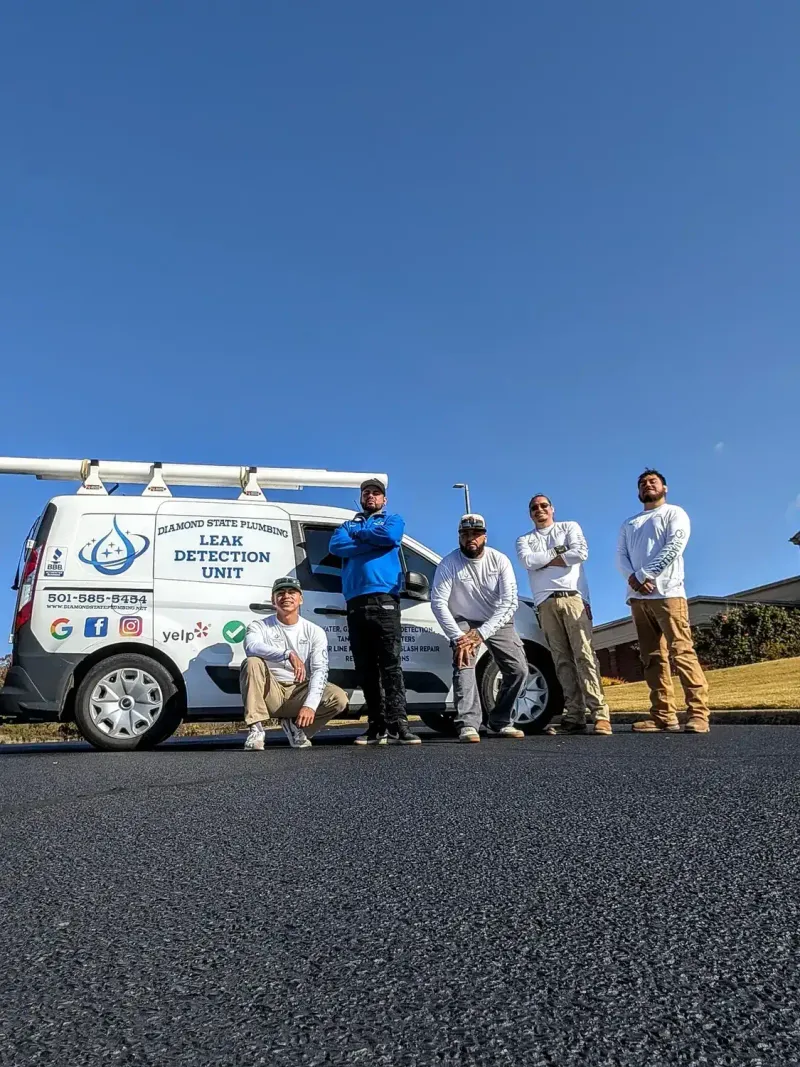


Why Local Matters
For Your Plumbing
You could call a big national chain. They'll probably charge you more and send someone who doesn't know Little Rock. Local plumbers understand that homes in Pulaski Heights have different plumbing than new builds in West Little Rock. They know which neighborhoods have older plumbing prone to mineral buildup and which areas tend to have foundation shifts that affect plumbing.
When you call a local company, you get someone who answers the phone and can usually tell you right away what's probably happening and when they can get there. No automated system. No waiting on hold for 20 minutes.
Response times are better too. A local plumber is 15 minutes away, not coming from another city. If you've got a burst pipe or sewage backing up, those minutes matter. Plus, local companies know the city inspectors, understand Little Rock's specific codes, and can get permits processed faster. When you need plumbing work done right and done quickly, local is the way to go.
 Licensed, Bonded & Insured
Get In Touch
Have any questions? Contact us today for expert services in Little Rock and neighboring communities. Let us handle your plumbing needs!