
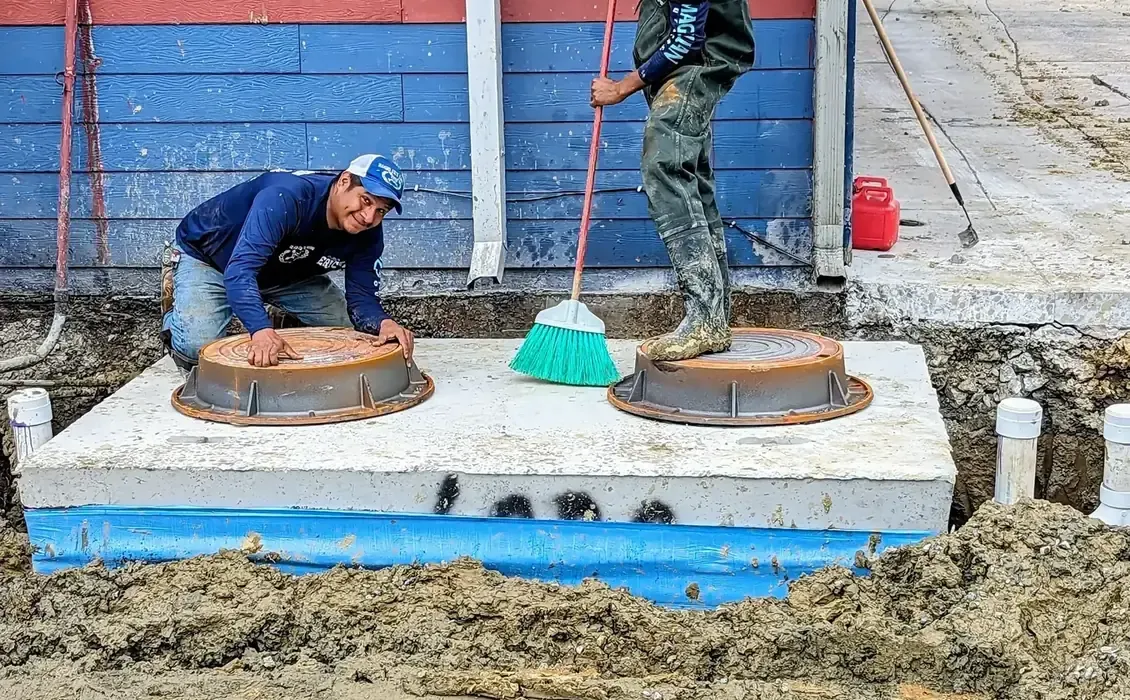
Grease Trap Replacement in Little Rock, AR
Need your grease trap replaced in Little Rock? Call Diamond State Plumbing at 501-585-5454. We're open Monday to Friday, 8 AM to 5 PM.
We replace small grease traps and in-ground grease interceptors. We work with restaurants, churches, schools, and grocery store kitchens. We pull the city plumbing permit and handle the LRWRA approval, so you never chase paperwork.
Call us to book an onsite check of your current unit. Our owner, Angel Bahena, is a licensed master plumber. We build every install to the Arkansas Plumbing Code and LRWRA rules.
Have another quote? Bring it to us for an honest comparison.
What Happens During Grease Trap Replacement in Little Rock?
- Inspect your old unit and count your kitchen fixtures
- Submit plans to LRWRA for sizing approval
- Pull the City of Little Rock plumbing permit
- Schedule the work around your service hours
- Have the old unit pumped out and removed
- Set the approved unit, clear the drain line, and test the flow
- Pass the LRWRA and city final inspections
Little Rock Requires a Working Grease Trap in Every Food Service Kitchen
Under the ordinance, every food service kitchen must have a working grease trap or interceptor. That covers more than restaurants. These kitchens count too:
- Cafeterias and school kitchens
- Churches
- Nursing homes and hospitals
- Bakeries, delis, and coffee shops
- Grocery stores and meat markets
- Hotels, food courts, and concession stands
- Your unit is defective, with broken, missing, or faulty parts
- Your unit can't be repaired
- You don't have a trap at all
- Your kitchen sends enough grease to cause sewer problems
- Your kitchen drains don't connect to the trap the way the rules require
The owner pays for any repair or replacement LRWRA orders. LRWRA also sets the deadline to finish the work. The clock starts on the date you get the notice.
Do you share an interceptor with other tenants in a strip center? Then the person who owns or controls the interceptor, or the property it sits on, is responsible for it.
Signs You May Need a Grease Trap Replacement in Little Rock
Look for these signs on your unit:
| Sign | What it means |
|---|---|
| Cracked walls | The tank can't hold its shape or keep waste contained |
| Missing or broken baffles | Grease slips past the trap and into the sewer |
| Broken inlet or outlet fittings | Water can't flow through the way it should, so backups start |
A failed trap can stop food prep in the middle of a rush and send customers away. Replacing it early helps you avoid that shutdown. If your kitchen is in an older Main Street or SoMa building, check whether your trap is concrete.
LRWRA inspectors check grease traps on both scheduled and surprise visits. They note any trap that can't keep grease out of the sewer. Replacing a failing unit first keeps you in compliance before an inspector finds the problem.
Determining Proper Grease Trap Size for Your Little Rock Restaurant
The Arkansas Plumbing Code sets the formula. For an in-ground gravity interceptor, you multiply peak flow in gallons per minute by 30 minutes (source). Smaller plastic units are sized to industry standards set by groups like ASME and PDI.
Before we size anything, we do an onsite fixture count. Then we send LRWRA what it needs to review your kitchen:
- A site plan
- A floor plan showing every plumbing fixture and its piping
- A plumbing riser diagram showing the grease waste lines and other sewer drains
- Any extra details LRWRA asks for
A trap that's too small fills faster between pump-outs. Once it's full, it stops separating grease well. A unit sized right for your kitchen handles a busy service without getting overloaded.
Adding seats in Hillcrest? If you also add sinks or a bigger dish machine, your flow goes up. Your current unit may no longer be big enough.
Choosing Between a Grease Trap and a Grease Interceptor
| Grease trap | Grease interceptor | |
|---|---|---|
| Capacity | Under 250 gallons | 250 gallons or more |
| Flow rate | Under 75 gallons per minute | Over 75 gallons per minute |
| Build | Needs a flow control device and a vent | Two compartments, each with its own manhole lid |
Whatever type you choose, LRWRA requires a unit from a manufacturer it has pre-approved.
Your interceptor must be easy to reach for inspection and pumping at all times. In Little Rock, it can't sit in a drive-through lane or driveway. In a parking area, steel bollards must keep cars off the manhole lids.
Thinking about an automatic grease removal system instead? LRWRA must approve it in writing before it goes in.
What to Expect During Grease Trap Replacement in Little Rock
We work around your hours as much as possible. We pick a time that keeps your normal service running. Once we start, the work moves fast.
Paperwork comes first. Here's what we handle before work begins:
- Plans and sizing sent to LRWRA for approval
- The plumbing permit from the City of Little Rock
- Arkansas Department of Health plumbing approval, if your project needs it
Already have a quote from another company? Bring it to us. We'll tell you straight whether we can beat it or whether their price is already fair.
Our Installation Process for Grease Traps in Little Rock
- Have the old unit pumped out, then remove and haul it away
- Set the new unit and connect it to the Arkansas Plumbing Code and LRWRA specs
- Clear your kitchen drain line
- Test the flow before we leave
For in-ground interceptors, LRWRA specs also call for a sampling and inspection manhole. Your other sewer lines connect after it. We build that in as part of the job.
Once the install is done, LRWRA and the city inspect the work. LRWRA gives you written notice of the result.
Older kitchens in the River Market District can have tight space to work in. We plan around your space before the job starts. The district also requires city approval before construction starts.
Maintaining Your Grease Trap After Grease Trap Replacement in Little Rock
| Grease trap | Grease interceptor | |
|---|---|---|
| When to clean | Open, check, and clean at least once a week | Pump when settled solids reach the outlet pipe, typically 8 inches deep, or when it stops catching grease |
| Who can do it | Your staff, with a written cleaning plan, or a registered hauler | An LRWRA-registered hauler only |
After your new unit goes in, we set up a pump-out schedule with you. You won't have to guess when your next service is due. An LRWRA-registered hauler does the pumping.
A few rules to follow:
- Don't pour enzymes, bacteria, or grease cutters down the drains without LRWRA approval
- Keep every pump-out record where an inspector can see it
Have a different drainage need? Visit our Little Rock, AR drainage services page for everything we offer.
Common Questions
No. In a city or sewer district, Arkansas law requires a licensed plumber to be in charge of any plumbing install. Owners can only skip the license rule in their own home. A commercial kitchen also needs LRWRA approval before the old unit comes out.
You can clean a small grease trap yourself if you follow a written cleaning plan. An interceptor is different. Only an LRWRA-registered hauler can pump it.
A small grease trap must be opened, checked, and cleaned at least once a week. An interceptor needs pumping when settled solids reach the outlet pipe. New kitchens start with an interceptor pump-out every three months.
Only a hauler registered with LRWRA can pump grease traps and interceptors here. That rule applies to plumbers and pumping companies alike. The only exception is your own staff cleaning a small trap with a written plan.
There's no set lifespan. Acid from old grease slowly eats away at concrete and metal, so material and pump-out habits make a big difference. Regular cleaning keeps your unit working longer, and we check its condition onsite.
Your grease unit must be easy to reach for inspection and pumping at all times. An interceptor can't sit in a drive-through lane or driveway. In a parking area, steel bollards must keep cars off the manhole lids.

Why Local Matters
For Your Plumbing




Why Local Matters
For Your Plumbing
You could call a big national chain. They'll probably charge you more and send someone who doesn't know Little Rock. Local plumbers understand that homes in Pulaski Heights have different plumbing than new builds in West Little Rock. They know which neighborhoods have older plumbing prone to mineral buildup and which areas tend to have foundation shifts that affect plumbing.
When you call a local company, you get someone who answers the phone and can usually tell you right away what's probably happening and when they can get there. No automated system. No waiting on hold for 20 minutes.
Response times are better too. A local plumber is 15 minutes away, not coming from another city. If you've got a burst pipe or sewage backing up, those minutes matter. Plus, local companies know the city inspectors, understand Little Rock's specific codes, and can get permits processed faster. When you need plumbing work done right and done quickly, local is the way to go.
 Licensed, Bonded & Insured
Get In Touch
Have any questions? Contact us today for expert services in Little Rock and neighboring communities. Let us handle your plumbing needs!