
Backflow Prevention in Little Rock, AR
Need a backflow preventer installed or replaced in Little Rock? Our licensed plumbers will check your setup and explain your options before any work starts. We're open 8AM-5PM, Monday to Friday. Call Diamond State Plumbing at 501-585-5454 to book your visit.
Common reasons to call us include lawn sprinklers, pools, wells, and valves cracked in a freeze. Book a weekday visit, and we'll explain your options before any work starts. As licensed plumbers, we keep your drinking water safe and your backflow setup up to code.
What Is Backflow Prevention in Little Rock, AR?
- Arkansas plumbing code requires one on lawn sprinkler systems.
- Wells, home fire sprinkler systems, and commercial buildings also need one.
- A licensed plumber installs it. A state-certified tester checks it, yearly for businesses and recommended yearly for homes.
Backflow Can Push Dirty Water Into Your Clean Pipes
A water main break or a fire crew opening a nearby hydrant can cause that pressure drop. Water then gets pulled backward through anything connected to your lines. A hose sitting in a pool or a sprayer full of lawn chemicals becomes a straw into your kitchen tap.
What can get pulled back into your drinking water:
- Fertilizer and weed killer from hose sprayers
- Pool water from a submerged hose
- Bacteria and dirty water pooled around sprinkler heads
A backflow preventer stops this. It uses check valves that close when flow tries to reverse, so water only moves one way. Central Arkansas Water runs a cross-connection control program to protect the public water supply. A working backflow preventer is your part of that protection.
Homes With Sprinklers in Little Rock Need a Backflow Preventer
Sprinkler heads pop up to water, then drop back into the soil. Dirty water collects around them between cycles. During a pressure drop, that water can get pulled back into your lines.
| Your setup | What you need |
|---|---|
| In-ground lawn sprinklers | RPZ backflow preventer |
| Private well on the property | Backflow preventer |
| Home fire sprinkler system | Backflow preventer |
| Garden hoses only | Hose bibb vacuum breaker on each outdoor faucet |
Not every house needs a full backflow preventer. When we visit, we check your setup and tell you what applies to your home. Summer is when sprinklers run hardest, so it's a good time to make sure yours is protected.
Find the Backflow Preventer on Your Property
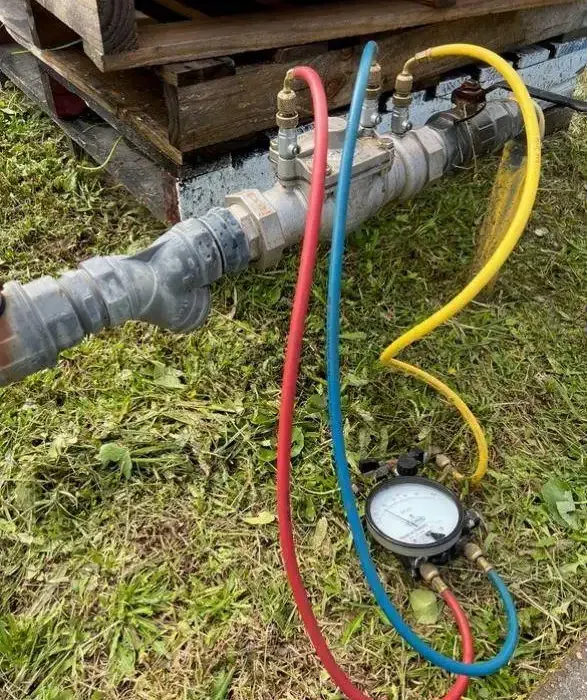
What a backflow preventer looks like:
- A brass or bronze valve body above the ground
- Two shutoff handles, one on each end
- Small test ports along the side
- A relief port on RPZ models
Some sit inside an insulated box to protect them from cold. If you own an older home in Hillcrest, check the sprinkler system closely. Older assemblies can stay in place under current rules, but they must be replaced if they're moved or need more than basic upkeep.
When we come out, we find the backflow preventer, tell you what type it is, and check its condition. If it's missing or outdated, we explain your options before any work starts.
A Licensed Plumber Installs Your Backflow Preventer Right
Central Arkansas Water also requires a permit before installation begins. The utility can inspect the finished install to confirm it matches the approved plans. If an assembly isn't installed and kept up right, the utility can shut off water service until it's fixed.
Where we place your backflow preventer:
- On your side of the water meter, before the first outlet
- On the line that feeds your sprinklers or other hazard
- Above ground, never buried in the soil
- Level, not standing up vertically
We also leave enough open space around it for testing. An RPZ needs clear room on each side, above, and below. Its top can't sit more than 30 inches above the ground (source).
An RPZ releases water through a relief port when it senses a pressure problem. We set it where that water can drain away without pooling or flooding the vent. A blocked vent can keep the valve from doing its job.
How the install works:
- Shut off your water supply.
- Flush the line to clear out dirt and debris.
- Cut in the new backflow preventer.
- Connect it and check for leaks.
- Turn the water back on and confirm normal flow.
We only install assemblies approved for use in the Central Arkansas Water system. After the install, a state-certified tester runs the first test within 10 days. You end up with a setup that meets local rules and protects your drinking water from day one.
Replace a Failed or Leaking Backflow Preventer Fast
Signs your backflow preventer has a problem:
- Water keeps running from the relief valve
- Water stains or rust on the valve body
- Sudden spikes or drops in water pressure
- Hissing or banging noises near the valve
Not every problem means a new valve. Here's what each one usually needs:
| Problem | What it usually needs |
|---|---|
| Cracked brass body | Full replacement |
| Outdated or wrong type of device | Full replacement |
| Worn rubber parts or dirty check valves | Repair by an ADH-certified repair technician |
We handle replacements. We remove the damaged assembly and install a new approved one in its place. A state-certified tester then runs the first test within 10 days.
Many failures show up in spring, when sprinklers turn back on after winter. A freeze can crack the body without any sign until the water is back under pressure. If you see water pouring out at startup, shut off the sprinkler supply and call us.
Protect Your Backflow Preventer Before a Hard Freeze
Hard freezes don't hit Little Rock often, but they do real damage when they come. The February 2021 storm froze and broke pipes and fire sprinkler lines across Central Arkansas. A backflow preventer with water still inside faces the same risk.
How to protect your backflow preventer in late fall:
- Shut off the water that feeds your sprinkler system.
- Open the drain valves to let water out of the line.
- Open the test cocks to release trapped water.
- Turn the shutoff handles and test cocks halfway, about 45 degrees.
- Wrap the valve with an insulated cover or heat tape.
The halfway position matters. A fully open or fully closed valve can trap water inside the ball, and that water can freeze and crack it.
Another option is to remove the backflow preventer for winter and store it somewhere warm. Put it back once the freeze risk has passed.
A few minutes of prep in the fall can save you a replacement in the spring. It can also keep a cracked valve from flooding your yard when the water comes back on. If yours cracks anyway, we replace it.
Learn more about our Little Rock plumbing services
Common Questions
Yes, Arkansas plumbing code requires a backflow preventer on lawn irrigation systems. Central Arkansas Water requires an RPZ on all new in-ground sprinkler systems.
Yes, and in Arkansas only a licensed plumber can install or replace one. A backflow tester's license alone doesn't allow installation.
Look outside on your side of the water meter, on the line that feeds your sprinklers. It's a brass or bronze valve above ground with two shutoff handles and small test ports.
A failed backflow preventer can let dirty water flow back into your drinking water during a pressure drop. Worn internal parts need an ADH-certified repair technician. If the body is cracked or the device is outdated, we replace it.
Usually not, unless you have a private well or a home fire sprinkler system. For garden hoses, a hose bibb vacuum breaker on each outdoor faucet is enough.
Shut off the water to your sprinkler system right away, then call us to replace the valve. Leaving it on can flood your yard and waste water.

Why Local Matters
For Your Plumbing




Why Local Matters
For Your Plumbing
You could call a big national chain. They'll probably charge you more and send someone who doesn't know Little Rock. Local plumbers understand that homes in Pulaski Heights have different plumbing than new builds in West Little Rock. They know which neighborhoods have older plumbing prone to mineral buildup and which areas tend to have foundation shifts that affect plumbing.
When you call a local company, you get someone who answers the phone and can usually tell you right away what's probably happening and when they can get there. No automated system. No waiting on hold for 20 minutes.
Response times are better too. A local plumber is 15 minutes away, not coming from another city. If you've got a burst pipe or sewage backing up, those minutes matter. Plus, local companies know the city inspectors, understand Little Rock's specific codes, and can get permits processed faster. When you need plumbing work done right and done quickly, local is the way to go.
 Licensed, Bonded & Insured
Get In Touch
Have any questions? Contact us today for expert services in Little Rock and neighboring communities. Let us handle your plumbing needs!