How Often Should Plumbing Be Replaced in a House? (Pipe Lifespans + Little Rock Warning Signs)
So how often should plumbing be replaced in a house? It depends on what your pipes are made of and how old they are. Some pipes last about 40 years, while others can last 70 or more. Below, we break it down by pipe type, with the warning signs we look for in Little Rock homes.
If you live in an older home in Hillcrest or the Heights, your pipes may be original. Many homes there were built in the early 1900s. Check your pipes before a small leak turns into a big repair.
How Often Should Plumbing Be Replaced in a House?
- PEX: about 40 years
- Copper water lines: about 70 years
- Plastic water lines: about 75 years
- PVC or ABS drain pipes: 50 to 80 years
- Cast iron drain pipes: 50 to 60 years
- Polybutylene or Orangeburg: known to fail, so have them checked now
Not sure what's in your walls? Schedule a plumbing inspection with a licensed Little Rock plumber.
How Long Do Plumbing Pipes Last? (Life Expectancy by Material)
| Pipe | What it carries | Typical life | What usually goes wrong |
|---|---|---|---|
| PEX | Water to your taps | About 40 years | Can split if it freezes inside a slab or packed soil |
| Copper | Water to your taps | About 70 years | Small pinhole leaks |
| PVC or ABS | Waste to the sewer | 50 to 80 years | Cracked or separated joints |
| Cast iron | Waste to the sewer | 50 to 60 years | Rust and cracks from the inside |
| Polybutylene | Water to your taps | Replace now | Sudden leaks and bursts |
| Orangeburg | Waste to the sewer | Replace now | Breaks down and backs up |
These are averages, not promises. Your pipes can wear out faster because of:
- Water chemistry: Minerals and acidity in your water can eat at metal pipes from the inside.
- How they were installed: A bad joint or a tight bend can fail early.
- Shifting soil: Parts of central Arkansas sit on clay that swells when wet and shrinks when dry. That movement can crack pipes under and around your home.
Two pipe types don't get a number at all. Polybutylene is a gray plastic supply pipe found in many homes built from the late 1970s to the mid-1990s. So many leaked that it led to a $950 million class action settlement in 1995. Today, the cost of replacing it is on you.
Orangeburg is an old sewer pipe made from wood pulp and tar. It breaks down over time, and the only sure way to spot it is with a sewer camera. If your house has either one, we recommend replacing it before it fails.
How to Tell What Kind of Pipes You Have
Check these places first:
- Your water heater: Look at the pipes going in and out of the top.
- Under your sinks: Look past the shiny chrome parts to where the pipes come out of the wall.
- Crawlspace or basement: You'll see supply lines and larger drain pipes here.
- Your main shutoff valve: The pipe here shows what feeds the whole house.
| Pipe | Color and look | Quick clue |
|---|---|---|
| Copper | Orange-brown, may have green spots | Rigid metal; a magnet won't stick |
| Galvanized steel | Dull silver-gray | Threaded joints; a magnet sticks |
| PEX | Red, blue, or white | Bends like a hose |
| Polybutylene | Gray inside; blue, gray, or black for the line from the street | Flexible, with metal crimp rings at the joints |
| Cast iron | Black or dark gray, heavy | Large drain pipes; a magnet sticks |
| PVC or CPVC | White or off-white | Rigid plastic with glued joints |
A fridge magnet is the easiest test. It sticks to steel and iron pipes, but not to copper or plastic.
Your home's age gives you another clue. Here's a rough guide:
- Built before 1970: Galvanized supply lines were common, and the sewer line may be cast iron or Orangeburg.
- Built from the late 1970s to the mid-1990s: Check for polybutylene.
- Newer homes or recent repipes: Most likely PEX or copper.
Signs Your Pipes Need to Be Replaced (Including Copper)
Check your water:
- Rusty, brown, or yellow water from your taps
- A metallic taste
- Low water pressure in every room, not just one faucet
Low pressure works the same way. If only one faucet is weak, it may be a clogged aerator. If the whole house is weak, older galvanized pipes may be clogged with rust inside.
Signs in copper pipes:
- Small pinhole leaks, often near bends and joints
- Green or blue-green crust on the outside
- Flaking or pitting on the pipe
Signs of a hidden leak:
- A water bill that jumps for no clear reason
- Hissing or running water when everything is turned off
- Warm spots on your floor
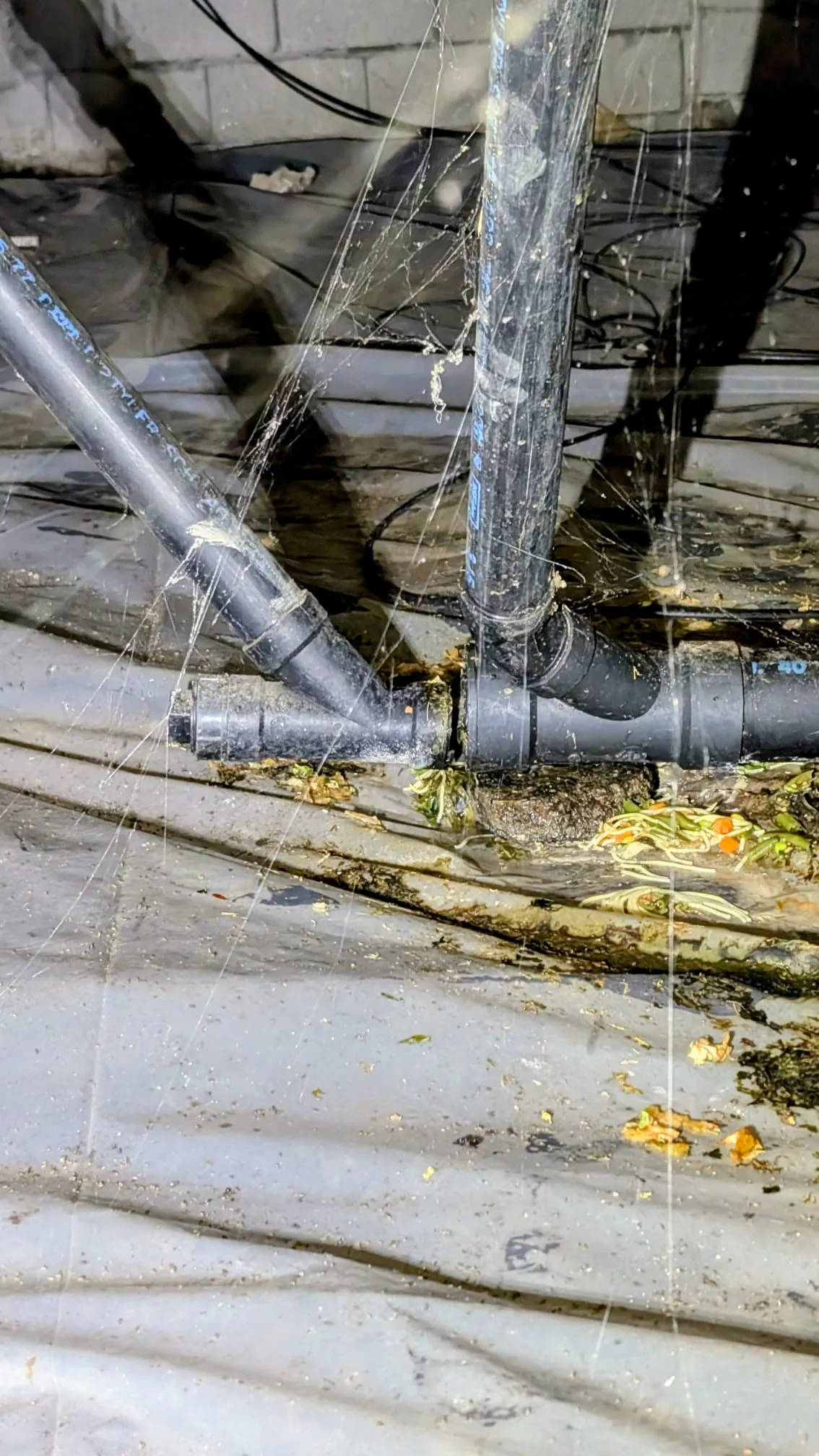
Repeat repairs: If leaks keep popping up in different spots, patching is costing you more than it fixes. Three leaks in two years is a strong sign the whole system is wearing out. At that point, it's time to talk about replacing the pipes.
Seeing any of these signs? We can track down hidden leaks and handle slab leak repair, so you can find the problem before it gets worse.
Will Insurance Pay to Repipe a House?
Think of it this way. If a pipe bursts during a hard freeze and floods your floor, your policy may cover the damaged floor and walls (source). It usually won't pay for the new pipe, and it won't pay to repipe the whole house.
| Situation | Usually covered? |
|---|---|
| A pipe suddenly bursts and floods a room | Yes, the water damage |
| A pipe freezes and bursts | Yes, the water damage |
| Replacing the broken pipe itself | Often no |
| A slow leak that went on for months | No |
| Old, rusted, or corroded pipes | No |
| Damage from skipped maintenance | No |
| Sewer backup into your home | Only with added backup coverage |
Old pipes can also affect whether you get insurance at all. Some insurers won't cover a home that still has polybutylene pipes. Others may charge more or limit what they'll pay.
If you think you have a claim, here's what to do:
- Read your policy. Look for the words "sudden and accidental" and "wear and tear."
- Shut off your water, then take photos before any cleanup starts.
- Ask your plumber to write down what failed and why.
- Ask your agent about water backup coverage if your policy doesn't have it.
What Plumbing Pipes Last the Longest?
But the longest-lasting pipe isn't always the best pick for your home. Cost, install time, and freeze risk matter too.
| Copper | PEX | CPVC | |
|---|---|---|---|
| Typical life | About 70 years | About 40 years | Varies |
| Cost | Highest | Lower | Lower |
| If water freezes inside | Can burst | Usually stretches without breaking | Can crack |
| Install time | Slowest | Fastest | In between |
Freeze risk matters here more than most people expect. In February 2021, Little Rock hit -1°F, its coldest reading since 1989 (source). In January 2024, another hard freeze tied or broke cold records around Arkansas.
PEX handles a freeze better than metal. If water freezes inside, PEX can usually stretch and then go back to its shape (source). It also holds heat better than copper, which can slow freezing down.
PEX isn't freeze-proof, though. If it freezes inside a concrete slab or packed soil, it can still split.
CPVC is a rigid plastic that costs less than copper. The downside is that it can get brittle as it ages.
For most homes, the choice comes down to copper or PEX. We'll walk you through both and help you pick what fits your home and budget.
Repiping Your House in Little Rock: What to Expect
Partial or whole-house?
- Partial repipe: Makes sense when the trouble is in one area, like a single bathroom or the main water line.
- Whole-house repipe: Makes sense when all your pipes are the same old material. That includes galvanized, polybutylene, or copper with leaks popping up in different rooms.
- Inspect: We check your pipes to see what you have and where it's failing.
- Plan: We map out which lines to replace, what material to use, and where we need access.
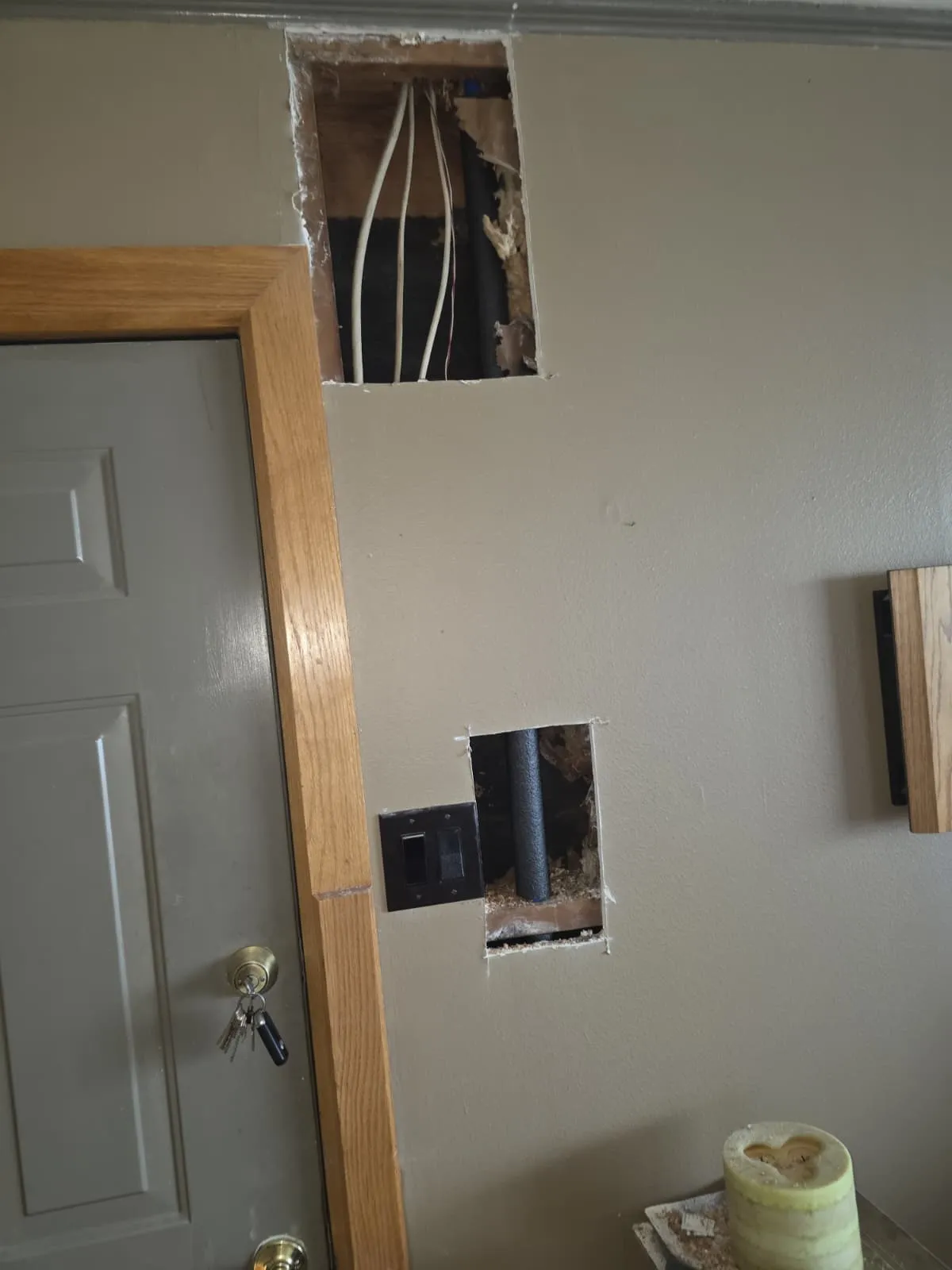
- Open access: We open only the spots we need to reach the pipes.
- Install: We run the new lines and connect your fixtures and water heater.
- Test: We turn the water on and check every connection for leaks.
- Close up: We close the openings and clean up the work area.
What affects time and cost:
- Size: More bathrooms and fixtures mean more pipe.
- Stories: A two-story home takes more work to reach.
- Slab or crawlspace: In a crawlspace, we can often reach pipes from below. On a slab, we may reroute new lines through the attic or walls instead of breaking up concrete.
- Material: PEX usually costs less and goes in faster than copper.
Ready to talk it through? Learn more about whole-house repiping in Little Rock.
Diamond State Plumbing is a family-owned team led by Angel Bahena, a master plumber. Every plumber on our team is licensed and background-checked.
We offer financing on every job, and we'll give you an honest second opinion on any quote. Talk to a licensed Little Rock plumber today.
Common Questions
Not completely, but we keep the openings small. We open only the spots we need to reach your pipes. In a crawlspace home, much of the work can happen from below. On a slab, we may run new lines through the attic or walls instead of breaking up the floor.
Yes, PEX made for home plumbing is designed for drinking water lines. It's a common choice for replacing older galvanized pipes, which can release lead into your water over time.
It can help, mostly by removing a problem buyers and insurers worry about. Old pipes like polybutylene can make a home harder to insure. New pipes give buyers one less thing to question during an inspection.
Look for flexible plastic pipe with metal crimp rings at the joints. Inside the house it's usually gray, and the line coming in from the street may be blue, gray, or black. It was used in many homes built from the late 1970s to the mid-1990s. If you're not sure, we can identify it during a plumbing inspection.
Orangeburg is an old sewer pipe made from wood pulp and tar. It was used before the 1970s and breaks down over time. You usually can't see it from inside the house. The surest way to find it is a sewer camera inspection.
Yes, they can. The zinc coating on galvanized pipe can contain lead, and that lead can get into your water over time (source). If you have galvanized pipes, ask your water utility about testing. Replacing them removes the risk.
Yes, and it happens more often than people expect. In February 2021, Little Rock hit -1°F, and Central Arkansas Water reported damaged pipes across its system. When a hard freeze is coming, drip both hot and cold faucets and open your sink cabinets. If a pipe does freeze, shut off your water and call a plumber right away.
No, not always. If the trouble is in one area, a partial repipe may be enough. If all your pipes are the same old material, replacing everything at once usually saves you from repeat repairs.
Yes, we can replace only the main water line. This makes sense when the problem is the line from the street, not the pipes inside. Signs include low pressure throughout the house or a wet spot in the yard that won't dry.
Get In Touch
Have any questions? Contact us today for expert services in Little Rock and neighboring communities. Let us handle your plumbing needs!