10 Signs You Should Call a Plumber Right Away
By then, a simple fix can turn into a torn-up floor. This guide covers the signs you should call a plumber right away. You'll know what can wait and what can't.
We're Diamond State Plumbing, a family-owned team of licensed plumbers in Little Rock. Our job is getting to the root of a problem, not just patching what you can see. That starts with you knowing when to pick up the phone.
First, we'll go through the 10 warning signs. Then we'll cover what to do while you wait and what to ask when you call. Last, we'll show you how to spot a plumber you can trust in Little Rock.
What are the signs you should call a plumber right away?
- You smell gas or rotten eggs.
- Sewage is backing up into a tub, shower, or floor drain.
- A pipe burst, or water is spraying or pooling.
- Several drains are slow or clogged at the same time.
- You hear water running when everything is off.
- Your water bill jumped for no clear reason.
- You feel warm spots on your floor.
- Your water heater is leaking or making loud popping sounds.
- You have no water, or your water pressure dropped suddenly.
- You see water stains, mold, or a sagging ceiling.
Seeing one of these signs right now? Get emergency plumbing in Little Rock from our licensed team.
1. You Smell Gas or Rotten Eggs
This is the one sign where a plumber isn't your first call. Gas can catch fire from a single spark. Here's what to do:
- Get everyone out of the house right away.
- Don't flip light switches or unplug anything.
- Don't use your phone until you're outside.
- Don't start a car in the garage.
- Leave the door open behind you.
- Once you're away from the house, call 911 and Summit Utilities.
2. Sewage Is Backing Up Into a Drain
This almost always means your main sewer line is blocked or broken. Sewage carries germs, and it soaks into floors and drywall fast. Until we get there:
- Stop flushing toilets and running water.
- Hold off on the washer and dishwasher.
- Keep kids and pets away from the dirty water.
- Don't pour drain cleaner into a sewer backup.
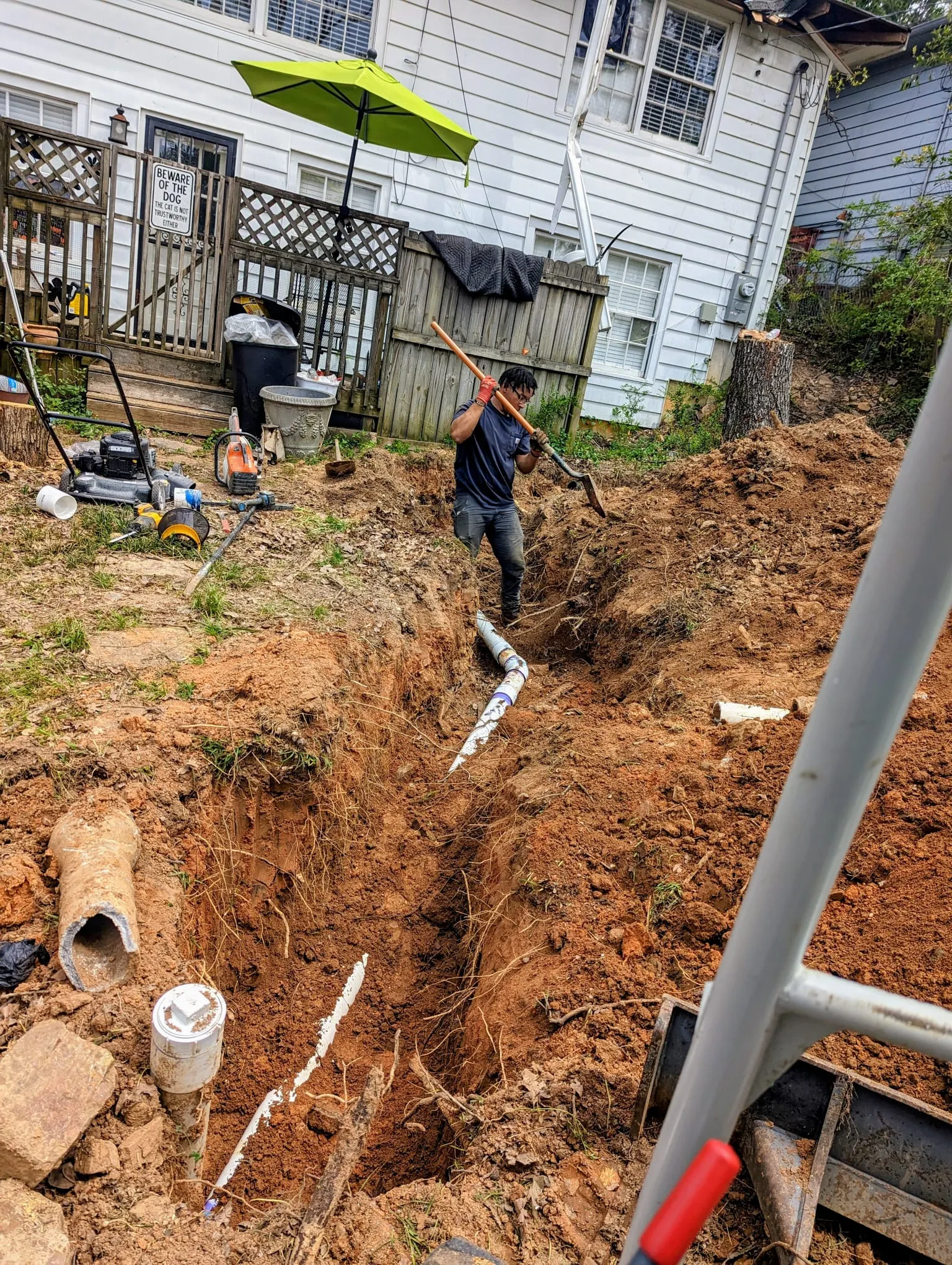
In Southwest Little Rock, we often find old Orangeburg, clay, or concrete sewer pipe. These older pipes crack, sag, and let tree roots in. Little Rock Water Reclamation Authority reimburses up to $2,500 when you replace your whole sewer service line. When we replace a line, we go all the way to the city tap.
3. A Pipe Burst or Water Is Pooling
Running water soaks into everything it touches. The longer it runs, the more drywall, flooring, and cabinets you'll end up replacing. Do these things first:
- Shut off your main water valve.
- Turn off power to any wet area if you can safely reach the breaker.
- Open a faucet to drain the water left in the lines.
- Take photos of the damage for your insurance.
In Little Rock, hard freezes tend to hit pipes in crawl spaces, garages, and outside walls first. We find the break and repair or replace the damaged section. Then we check the rest of the line for weak spots before your water goes back on.
4. Several Drains Are Slow at the Same Time
Every drain in your house empties into one main sewer line. When that line starts to clog, water has fewer places to go. Signs it's the main line:
- The toilet gurgles when you run the sink.
- Water rises in the tub when you flush.
- The lowest drains in the house act up first.
- Plunging helps for a day, then the drain is slow again.
Store-bought drain cleaner won't reach a main line clog. It can also sit in older pipes and wear them down. We clear the main line and show you what caused the clog. If roots or grease keep coming back, we'll walk you through your options, including hydro jetting.
5. You Hear Water Running When Everything Is Off
That sound means water is leaking somewhere you can't see. A hidden leak can soak into framing, insulation, and subfloor for weeks before a stain shows up.
Your water meter can confirm it. EPA WaterSense suggests this simple test:
- Turn off every faucet and water appliance.
- Write down the reading on your water meter.
- Wait two hours without using any water.
- Check the meter again. If the number changed, you likely have a leak.
We track the sound to its source, whether it's inside a wall, along a supply line, or under your slab. Then we repair only the section that's leaking.
6. Your Water Bill Jumped for No Reason
When your habits stay the same and the bill goes up, water is escaping somewhere. A leak runs day and night, and you pay for every gallon.
A few ways to check your bill:
- Compare it to the same month last year.
- Look at gallons used, not just the dollar amount.
- Check a winter month. EPA WaterSense says a family of four using over 12,000 gallons a month in winter may have a serious leak.
If your bill keeps climbing, call us. We find where the water is going and fix the leak, so you stop paying for water you never used.
7. You Feel Warm Spots on Your Floor
A warm spot usually means a hot water line is leaking under your concrete slab. The escaping hot water heats the concrete from below. Other signs often show up with it:
- Damp carpet or flooring with no spill nearby
- New cracks in your floor or foundation
- Your water heater running more than usual
- The sound of water moving under the floor
We pinpoint the leak first, so we only open up what we need to. Then we repair the line or reroute it around the slab. Get slab leak repair from our team before a small leak turns into foundation work.
8. Your Water Heater Is Leaking or Popping
Popping usually comes from sediment built up at the bottom of the tank. Water gets trapped under that layer and boils, which makes the noise. Over time, the buildup wears out the tank.
A leak is more urgent. Water around the base can mean the tank itself is failing. When a tank gives out, it can release its water all at once.
Other warning signs:
- Rusty or brown hot water
- Hot water that runs out faster than it used to
- Water dripping from the relief valve pipe
We check the tank, the valves, and the connections. Then we tell you straight whether a repair makes sense or it's time to replace.
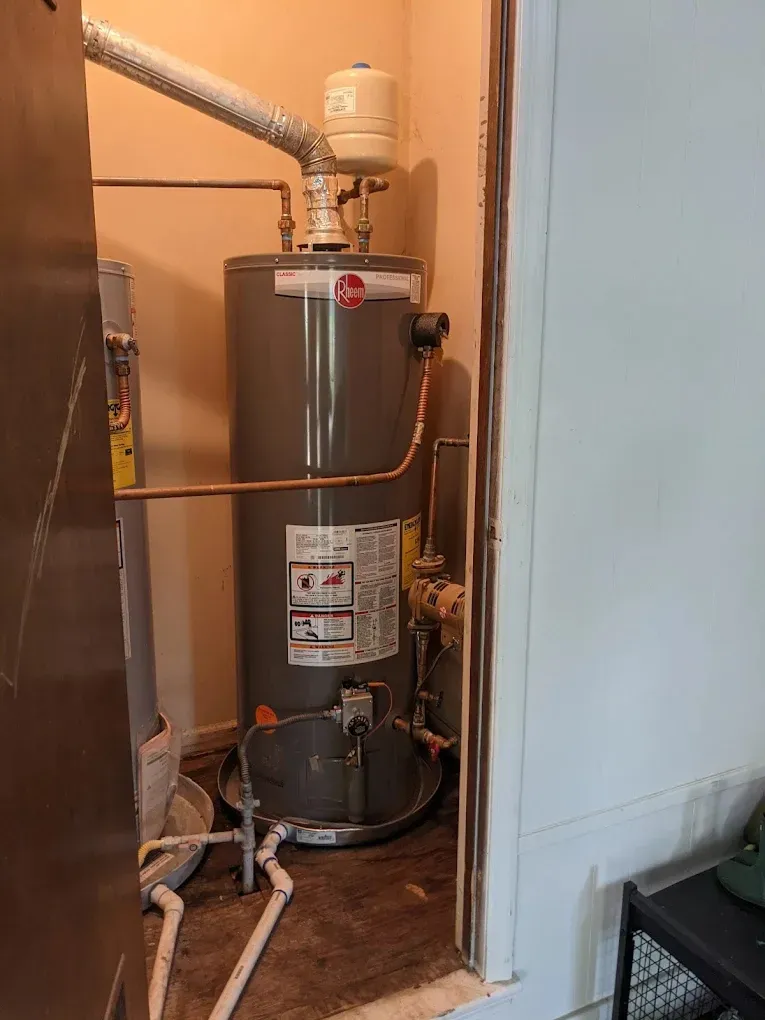
When we replace water heaters in older Little Rock homes, the old setup often isn't up to today's code. We've added expansion tanks, run combustion air piping, and moved shut-off valves to where code requires them. On a recent install, we added a water hammer suppressor to absorb the pressure spikes that make pipes bang. Your new heater goes in right, not just swapped into the old spot.
We install both traditional and tankless water heaters, and we offer financing on every job.
9. No Water or a Sudden Pressure Drop
Check this first:
- Ask a neighbor if their water is working.
- Look for outage or main break notices from Central Arkansas Water.
- Make sure your main shut-off valve is fully open.
- Check if the low pressure is at one faucet or every faucet.
Slow pressure loss over months is different. In older homes, galvanized pipe rusts on the inside until water can barely get through.
We find where the line broke and repair or replace it. When a whole line needs replacing, we run new pipe from your house to the city tap. If the old line runs under a slab or driveway, we can reroute it instead.
10. Water Stains, Mold, or a Sagging Ceiling
These signs mean water has been leaking for a while. By the time a stain shows, the drywall behind it is often soaked. EPA says to dry water-damaged areas within 24 to 48 hours to help prevent mold.
Watch for:
- Brown or yellow stains on ceilings or walls
- Paint that bubbles, peels, or feels soft
- Black spots or a musty smell under sinks
- Warped floors or swollen cabinet bottoms
A ceiling stain doesn't always mean the leak is right above it. Water travels along pipes and framing before it drips. We trace it back to the source and fix the leak itself. That way the stain doesn't come back after you paint over it.
Before You Call: What to Know and What to Ask
- What you're seeing, hearing, or smelling
- Where it's happening and when it started
- About how old your home and water heater are
- Photos or a short video of the problem
- Anything you've tried already, like drain cleaner
Then ask the plumber a few questions:
- Are you licensed in Arkansas?
- Do you charge a flat rate or by the hour?
- Is there a trip fee or an after-hours fee?
- Can you show me the problem before you fix it?
- What are my options, repair or replace?
- Is the work guaranteed, and for how long?
How to Spot a Plumber You Can Trust in Little Rock
| Good signs | Red flags |
|---|---|
| Licensed in Arkansas and gives you the number | Won't share a license number |
| Explains the problem and your options | Pushes you to decide on the spot |
| Shows you proof, like photos or camera footage | Says you need a whole new line with no proof |
| Gives a clear price before work starts | Wants full payment up front or cash only |
| Pulls the permit when the job needs one | Asks you to get the permit yourself |
| Real Google reviews with owner replies | No local address and no reviews |
The FTC lists several of these red flags as signs of a home improvement scam.
On big jobs, like a sewer line replacement or a repipe, get a second opinion. Getting another quote? Bring it to us first. We'll tell you straight whether we can beat it or whether their price is already fair.
Angel Bahena started Diamond State Plumbing in 2018 and still has the same phone number from day one. He's a master plumber who owns the company outright. His brothers David and Eloy work alongside him.
All three are licensed, background-checked plumbers with 25 years of experience between them. Don't just take our word for it. Read our Google reviews and see what people across Little Rock say about us.
Get Help From a Local Little Rock Plumber
We handle it all, from a small repair to a full system replacement. That includes gas lines, sewer lines, slab leaks, water heaters, and emergency calls. We tell you what we're doing as we go, so you're never guessing about what's happening in your own house.
Diamond State Plumbing is based at 506 Mimi Ln, Little Rock, AR 72211. Call our Little Rock plumbers and tell us what you're seeing. We'll help you figure out what can wait and what can't.
Common Questions
A good plumber is licensed in Arkansas, explains your options, and gives you a clear price before starting. They also show you the problem and pull permits when a job needs one.
Get a clear price before work starts, and never pay the full amount up front. On big jobs, ask to see proof of the problem and get a second opinion.
Know what you're seeing, where it's happening, and when it started. Photos and the age of your home and water heater help, too.
Ask if they're licensed in Arkansas and how they charge. Also ask to see the problem, what your options are, and whether the work is guaranteed.
One slow drain usually isn't an emergency. Several slow drains at once can mean your main sewer line is clogging, so call soon.
Call 911 and Summit Utilities first, from outside your home. Once the gas company says it's safe, call a licensed plumber to find and repair the leak.
Get In Touch
Have any questions? Contact us today for expert services in Little Rock and neighboring communities. Let us handle your plumbing needs!