
How Is Repiping Done? A Step-by-Step Look at a Whole-House Repipe in Little Rock
More than half of the homes in Little Rock were built before 1980. Many still have older water lines. Some have galvanized steel that rusts from the inside. Others have gray poly pipe from the late '70s to the mid '90s.
When those lines start to fail, you notice. Your shower slows to a trickle. Your water comes out brown. Or we fix one leak, and another shows up a few months later.
That's when the word "repipe" comes up. This guide explains how repiping is done, step by step. It covers everything from our first look under your house to the final city inspection. We're Diamond State Plumbing, and we pull a City of Little Rock permit on every repipe.
Below, you'll see what a repipe replaces and how we route new lines through your crawl space or attic. You'll also learn how long the work takes, which pipe goes in, and what drives the cost.
How Is Repiping Done?
Repiping is done by removing your old water supply lines and replacing them with new pipe, usually PEX or copper. Here's how we repipe a whole house in Little Rock:
- Inspect and plan. We check your old pipes, crawl space, and attic. Then we pick the best route for the new lines.
- Pull a permit. We get a City of Little Rock plumbing permit before any work starts.
- Replace the lines. We take out the old pipe and run new lines to every fixture. That includes sinks, toilets, showers, your water heater, the washer box, and outdoor hose bibs.
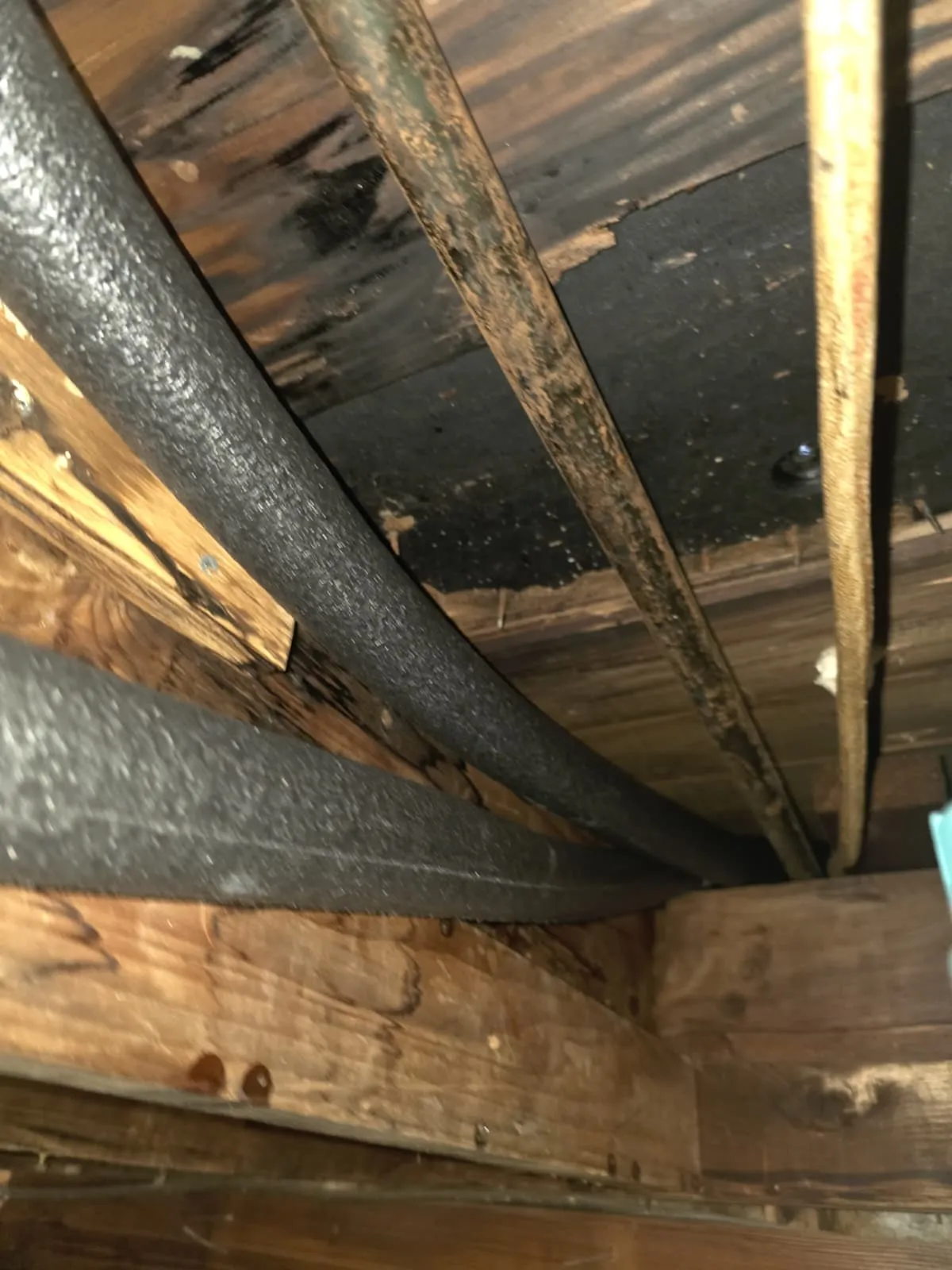
- Insulate and anchor. Every new line is insulated and anchored to the 2x6s in your attic or crawl space.
- Test and inspect. We turn the water back on and check each fixture for leaks. Then a city inspector signs off.
What Does Repiping Replace?
A repipe replaces the water supply lines in your home. These are the pipes that carry clean water to your fixtures. Your drain lines are a separate system, so a repipe doesn't touch them.
When we repipe a house, we redo the feed line to every fixture. That includes:
A whole-house repipe swaps out all of these lines at once. If only one section has failed, a partial pipe replacement may be enough. The line from your water meter to the house is a separate job, called water line replacement.
When we repipe a house, we redo the feed line to every fixture. That includes:
- Toilets and bathroom vanities
- Showers
- Kitchen sinks and pot fillers
- Your water heater
- The washer box
- Outdoor hose bibs
- Dog wash rooms, if your home has one
A whole-house repipe swaps out all of these lines at once. If only one section has failed, a partial pipe replacement may be enough. The line from your water meter to the house is a separate job, called water line replacement.
How a Whole-House Repipe Is Done, Step by Step
Every house is a little different, but our repipes follow the same five steps. Here's what happens at your home from start to finish.
1. We inspect and plan the route.
We start under your house and up in your attic. We look at the old lines, how they run, and how much room we have to work. Then we choose the route that fits your home best: the crawl space, the attic, or both.
2. We pull a city permit.
Before we cut any pipe, we pull a City of Little Rock plumbing permit. That means a city inspector will check our work when we finish. We handle the permit for you.
3. We shut off the water and replace the lines.
We turn off your main water supply and take out the old pipe. Then we run new lines to every fixture listed above, following the route we picked in step one. Our owner, master plumber Angel Bahena, puts it simply: a repipe means "redoing the entire feed lines to all the fixtures."
4. We insulate and anchor every line.
This is the step we don't rush. Every new line gets insulated. Then we anchor it to the 2x6s in your attic or crawl space so it stays in place.
5. We test and get the city inspection.
We turn the water back on and run every fixture. We check each connection for leaks before we call it done. Then the city inspector comes out to sign off on the job.
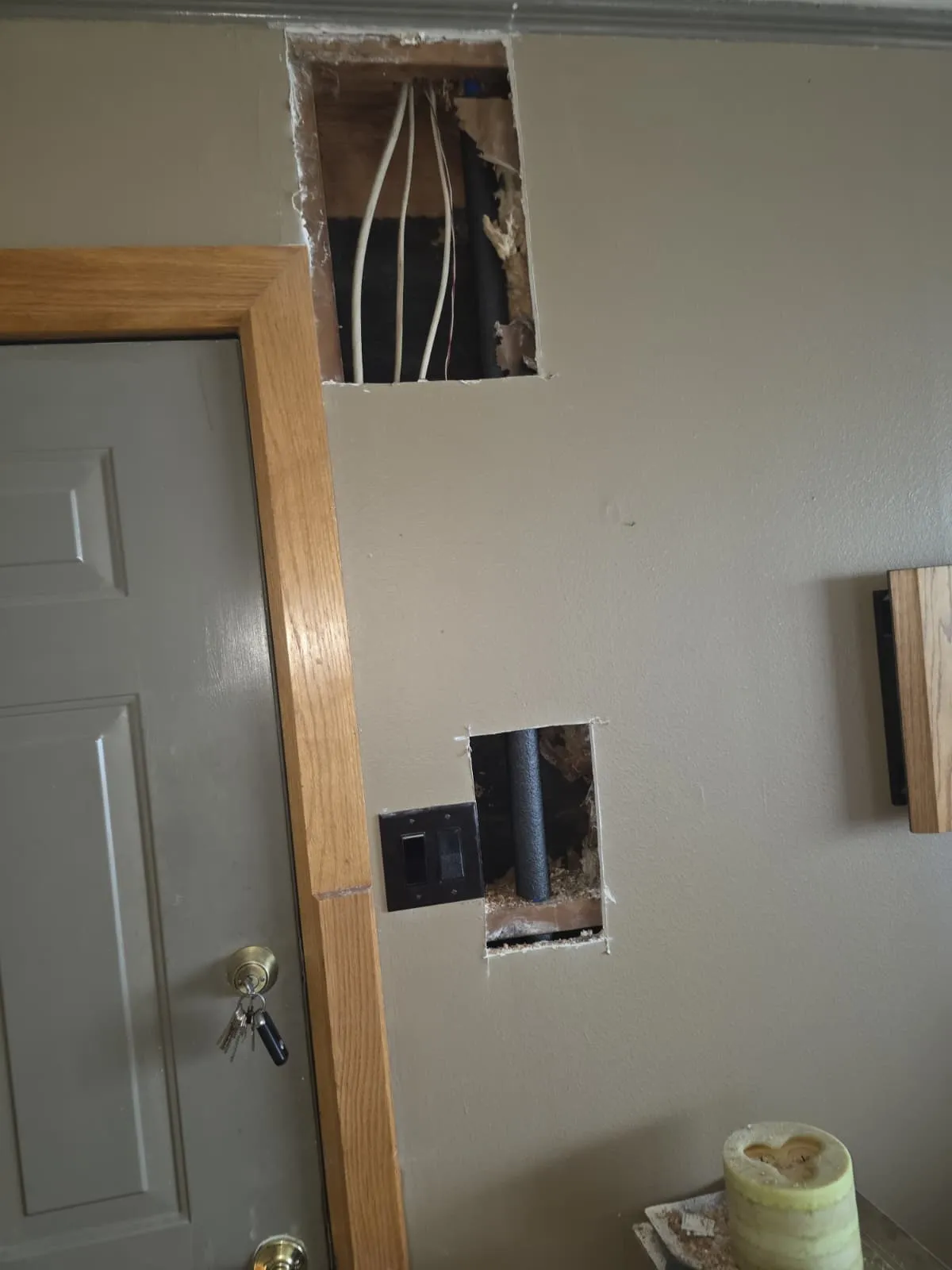
Crawl Space or Attic? How Plumbers Route New Pipes in Little Rock Homes
The new lines have to reach every fixture, and there's more than one way to get there. We use whichever route fits your home's needs. Some homes get all new lines under the floor. Others need the attic, or a mix of both.
Do we have to open your walls? It depends on the house. Your layout and where your fixtures sit decide it. If any wall access is needed, we'll tell you before we start.
Insulation matters in both spots. In February 2021, Little Rock got 20.3 inches of snow and dropped to -1°F. That's why every line we run gets insulated.
Rodents are the other thing we check. If your crawl space or attic has open spots where rodents can get in, we'll note it on your job. In that case, our warranty won't cover rodent damage to the new lines.
| Crawl space | Attic | |
|---|---|---|
| How the lines run | Under the floor, up to each fixture | Overhead, down to each fixture |
| What to watch for | Open vents or gaps that let rodents in | Open areas that let rodents in |
Insulation matters in both spots. In February 2021, Little Rock got 20.3 inches of snow and dropped to -1°F. That's why every line we run gets insulated.
Rodents are the other thing we check. If your crawl space or attic has open spots where rodents can get in, we'll note it on your job. In that case, our warranty won't cover rodent damage to the new lines.
PEX vs Copper: Which Pipe Goes In?
For most homes, we recommend PEX. It's a flexible plastic pipe, and it costs a lot less than copper. Copper can still be done if you want it. The choice is yours.
Copper's one clear win is strength. Because it's rigid, rodents can't easily bite through it. That matters if your crawl space or attic has open spots where rodents get in.
What about freezing? In our experience, there isn't much difference between the two. Either pipe can burst when the cold is bad enough. That's why we insulate every line, no matter which pipe you pick.
| PEX | Copper | |
|---|---|---|
| Parts cost | Lower | About 3 times the price of PEX |
| Rodent resistance | Softer, easier for rodents to bite | Rigid, hard for rodents to bite or pierce |
| Freeze damage (our experience) | Can burst in a hard freeze | Can burst in a hard freeze |
| Our pick | Most homes | If you want extra rodent protection |
What about freezing? In our experience, there isn't much difference between the two. Either pipe can burst when the cold is bad enough. That's why we insulate every line, no matter which pipe you pick.
How Long Does a Full House Repipe Take?
Most homes take 1 to 6 days, depending on size. A typical 3-bedroom, 1-bath home in Little Rock can often be repiped in one day. We run the lines under the house and up top on that same day.
What a one-day repipe looks like
On a smaller home, the whole job fits into a single workday. Here's how that day usually goes:
Why some jobs take a second day
Sometimes we come back for a second day. That day is for finishing work: insulating, anchoring lines to the 2x6s, and checking that everything runs right. We don't leave your property until it does.
We'd rather take one extra day than rush the parts you'll never see. Insulating and anchoring every line is part of what our warranty stands behind.
What can stretch the timeline
The biggest factor is the size of your home. More bathrooms and more fixtures mean more new lines to run and connect.
As the work goes on, we keep you posted, so you're never guessing what's happening in your home.
The city inspection
Every repipe we do gets a City of Little Rock permit. When the work is done, a city inspector comes out to check it. That visit is part of every repipe we do.
| Home | Typical time |
|---|---|
| 3 bedrooms, 1 bath | Often 1 day, sometimes a second day to finish up |
| Larger homes with more baths | Up to 6 days |
On a smaller home, the whole job fits into a single workday. Here's how that day usually goes:
- We confirm the route through your crawl space, attic, or both
- We shut off your main water supply
- We pull out the old lines and run new ones to every fixture
- We connect each fixture and turn the water back on
- We run every faucet, toilet, and shower to check for leaks
Why some jobs take a second day
Sometimes we come back for a second day. That day is for finishing work: insulating, anchoring lines to the 2x6s, and checking that everything runs right. We don't leave your property until it does.
We'd rather take one extra day than rush the parts you'll never see. Insulating and anchoring every line is part of what our warranty stands behind.
What can stretch the timeline
The biggest factor is the size of your home. More bathrooms and more fixtures mean more new lines to run and connect.
As the work goes on, we keep you posted, so you're never guessing what's happening in your home.
The city inspection
Every repipe we do gets a City of Little Rock permit. When the work is done, a city inspector comes out to check it. That visit is part of every repipe we do.
How Difficult Is It to Repipe a House?
Repiping a house is hard to do yourself. It takes planning, the right tools, and long hours under the floor or in the attic. A bad connection under the floor can leak where you can't see it.
Here's what the job takes:
What's easy to miss on a DIY repipe
Here's what's easy to miss when you do it yourself:
Permits and licensing in Little Rock
In Arkansas, plumbers are licensed by the Arkansas Department of Health. State law also says plumbing work can't start without the permits it requires.
In Little Rock, the city requires a permit for work over $500 or any work that needs an inspection (source). A whole-house repipe falls into both. When we take the job, the permit and inspection are part of what we do.
What we handle for you
When you hire us, you don't have to manage any piece of the job. We take care of:
Who does the work
Our team trained through the Arkansas Construction Education Foundation. All of our plumbers are licensed in Arkansas and background-checked. Angel, our owner, is a master plumber.
Here's what the job takes:
- Planning a route for every line in the house
- Working in a tight crawl space or attic
- Making PEX or copper connections that won't leak
- Testing the whole system once the water is back on
- Pulling a permit and passing a city inspection
| Doing it yourself | Hiring a licensed plumber | |
|---|---|---|
| Skills and tools | You buy or rent tools and learn as you go | We bring the tools and the training |
| Permit and inspection | You pull the permit and meet the inspector | We pull the permit and get the city inspection |
| Time | Depends on your skill and free time | 1 to 6 days for most homes |
| If something leaks later | It's on you | Covered by our 5 to 10 year repipe warranty |
Here's what's easy to miss when you do it yourself:
- A connection that drips slowly under the house
- Lines left loose instead of anchored to the framing
- Bare lines in the crawl space or attic with no insulation
- A fixture that got missed and still runs on old pipe
- Work that fails inspection and has to be redone
Permits and licensing in Little Rock
In Arkansas, plumbers are licensed by the Arkansas Department of Health. State law also says plumbing work can't start without the permits it requires.
In Little Rock, the city requires a permit for work over $500 or any work that needs an inspection (source). A whole-house repipe falls into both. When we take the job, the permit and inspection are part of what we do.
What we handle for you
When you hire us, you don't have to manage any piece of the job. We take care of:
- Planning the route through your crawl space, attic, or both
- Pulling the City of Little Rock plumbing permit
- Removing the old pipe
- Running, insulating, and anchoring every new line
- Testing every fixture before we leave
- Getting the city inspection
Who does the work
Our team trained through the Arkansas Construction Education Foundation. All of our plumbers are licensed in Arkansas and background-checked. Angel, our owner, is a master plumber.
What Does Repiping Cost, and Is It Worth It?
There's no flat price for a repipe. The cost depends on your home. Here's what moves that number up or down.
What affects the cost of a repipe
Is it worth it to repipe instead of patching?
Say we go under your house to fix one leak. We find the rest of the lines are just as old. When that happens, we strongly suggest a repipe. Patching one spot doesn't fix the pipe right next to it.
What our repipe warranty covers
Every repipe comes with a 5 to 10 year warranty, depending on the home. It covers our work, with a few exceptions:
Why waiting usually costs more
Federal price data showed building material costs up about 4% over one year in late 2025. Angel's view from the field is simple: a repipe you put off will cost more later.
Does homeowners insurance cover it?
Most homeowners policies won't pay to replace old pipes. They usually cover sudden water damage, like a burst pipe that soaks your floors. If your insurer decides the pipes were neglected, even that damage may not be covered. Check your policy or ask your agent.
Ways we keep it manageable
We offer financing on every job. Already have a quote from another plumber? Bring it to us first. We'll tell you straight whether we can beat it or whether their price is already fair.
Ready for a real number on your home? Get a quote for repiping in Little Rock.
What affects the cost of a repipe
| Factor | Why it changes the price |
|---|---|
| Home size | A bigger home needs longer runs of pipe |
| Bathrooms and fixtures | Every fixture gets its own new feed line |
| PEX or copper | Copper parts cost about 3 times as much as PEX |
Say we go under your house to fix one leak. We find the rest of the lines are just as old. When that happens, we strongly suggest a repipe. Patching one spot doesn't fix the pipe right next to it.
| Patching a leak | Repiping | |
|---|---|---|
| What gets fixed | One section of pipe | Every supply line in the house |
| The rest of the old pipe | Stays in place, same age and condition | Removed |
| What comes next | The next weak spot can start leaking | New lines to every fixture |
| Warranty | Covers the repaired section | Covers the whole system for 5 to 10 years |
Every repipe comes with a 5 to 10 year warranty, depending on the home. It covers our work, with a few exceptions:
- Rodent damage, if your crawl space or attic has open areas we note on the job
- Physical damage from other causes
- Climate damage, like a hard freeze
Why waiting usually costs more
Federal price data showed building material costs up about 4% over one year in late 2025. Angel's view from the field is simple: a repipe you put off will cost more later.
Does homeowners insurance cover it?
Most homeowners policies won't pay to replace old pipes. They usually cover sudden water damage, like a burst pipe that soaks your floors. If your insurer decides the pipes were neglected, even that damage may not be covered. Check your policy or ask your agent.
Ways we keep it manageable
We offer financing on every job. Already have a quote from another plumber? Bring it to us first. We'll tell you straight whether we can beat it or whether their price is already fair.
Ready for a real number on your home? Get a quote for repiping in Little Rock.
Get In Touch
Have any questions? Contact us today for expert services in Little Rock and neighboring communities. Let us handle your plumbing needs!

Click to load map