
Can You Fix a Slab Leak Without Digging? Your Options in Little Rock
You notice a warm spot on your kitchen floor. Your water bill jumped this month for no clear reason. Now you're picturing a jackhammer going through your tile.
Can you fix a slab leak without digging? Often, yes. We handle slab leak repair in Little Rock, and we can often fix the leak without breaking your floor. This guide shows you how we do it.
Hidden leaks add up. The EPA says the average home's leaks can waste more than 9,300 gallons of water each year. A slab leak can go unnoticed for weeks or even months because it sits under concrete.
First, we explain how we find a leak under your slab without tearing up the house. Then we cover the no-dig fix, when digging still makes sense, and how to pick the right option. We finish with why slab leaks happen in Little Rock homes. Last, you'll see what to do if you think you have one.
Can you fix a slab leak without digging? Often, yes. We handle slab leak repair in Little Rock, and we can often fix the leak without breaking your floor. This guide shows you how we do it.
Hidden leaks add up. The EPA says the average home's leaks can waste more than 9,300 gallons of water each year. A slab leak can go unnoticed for weeks or even months because it sits under concrete.
First, we explain how we find a leak under your slab without tearing up the house. Then we cover the no-dig fix, when digging still makes sense, and how to pick the right option. We finish with why slab leaks happen in Little Rock homes. Last, you'll see what to do if you think you have one.
Can You Fix a Slab Leak Without Digging?
Yes, in many cases we can fix a slab leak without breaking your floor. The main no-dig fix is a reroute.
Before any repair, we find the exact leak spot. We use listening devices, thermal cameras, and pressure tests to pinpoint it.
Not sure which option fits your home? See how we handle slab leak repair in Little Rock.
- How a reroute works: We run a new water line through your walls or attic. Then we shut off the leaking pipe under the slab.
- What you see: A few small drywall openings, not a torn-up floor.
Before any repair, we find the exact leak spot. We use listening devices, thermal cameras, and pressure tests to pinpoint it.
Not sure which option fits your home? See how we handle slab leak repair in Little Rock.
How Do Plumbers Find a Leak Under a Slab?
We find a slab leak by testing your pipes and listening through the concrete. You don't need to break your floor to find it. Each tool gives us one clue, and together they point to the leak.
- Pressure test: We isolate sections of your plumbing and watch the pressure. This tells us if the leak is on a hot line or a cold line.
- Listening devices: Water escaping a pipe makes a sound. Our acoustic equipment picks up that sound through the concrete.
- Thermal camera: A hot water leak warms the floor above it. The camera shows those warm spots on screen.
- Line locator: This tool traces where your pipes run under the slab. It helps us match the sound and heat to a real pipe.
No-Dig Ways to Fix a Slab Leak
The main way to fix a slab leak without digging is a reroute. Epoxy lining is another option you may hear about. It protects pipes, but it doesn't fix the leak itself.
Slab Leak Reroute
A reroute goes around the broken pipe instead of digging down to it. We run a new water line through your walls or attic. Then we cap the old line under the slab and leave it in place.
Your new line can be PEX or copper. Both are approved for drinking water under the Arkansas Plumbing Code. PEX is flexible tubing, and copper is rigid pipe.
Epoxy lining coats the inside of an existing pipe. It does not seal an active leak. The leak has to be repaired first, and then the pipe gets coated.
Lining only works on rigid copper or galvanized steel pipe. The epoxy should be certified to NSF/ANSI 61, the standard for drinking water parts.
Want to know if your home qualifies for a no-dig fix? Learn more about our slab leak repair in Little Rock.
Slab Leak Reroute
A reroute goes around the broken pipe instead of digging down to it. We run a new water line through your walls or attic. Then we cap the old line under the slab and leave it in place.
Your new line can be PEX or copper. Both are approved for drinking water under the Arkansas Plumbing Code. PEX is flexible tubing, and copper is rigid pipe.
- Pros: Your floor stays whole. The leaking line under the slab is out of use for good.
- Cons: It needs a clear path through your walls or attic.
Epoxy lining coats the inside of an existing pipe. It does not seal an active leak. The leak has to be repaired first, and then the pipe gets coated.
Lining only works on rigid copper or galvanized steel pipe. The epoxy should be certified to NSF/ANSI 61, the standard for drinking water parts.
- Pros: It protects pipe that is still in good shape.
- Cons: It doesn't fix the leak. It doesn't work on every pipe type.
Want to know if your home qualifies for a no-dig fix? Learn more about our slab leak repair in Little Rock.
When Do You Still Need to Break the Slab?
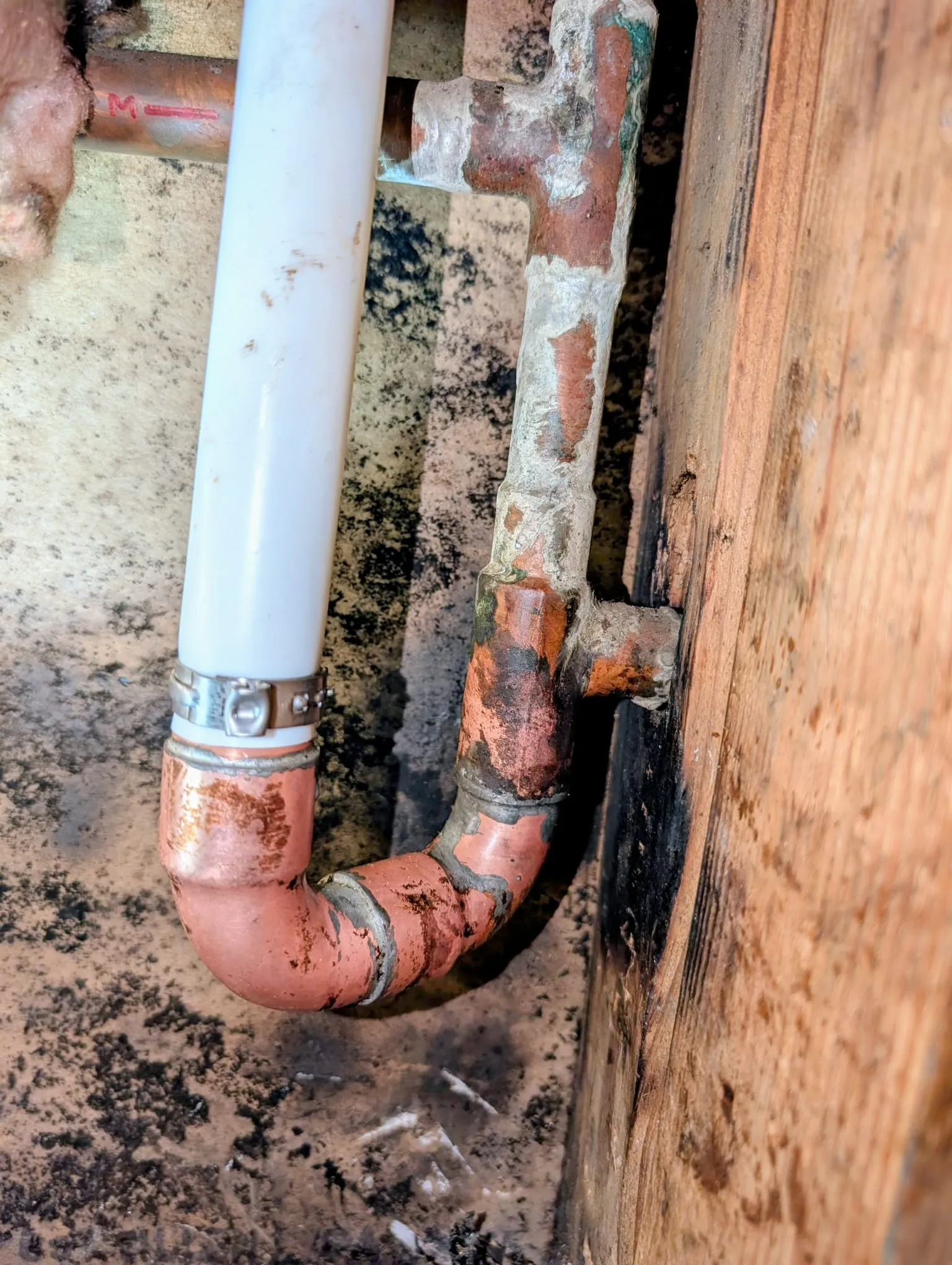
A reroute doesn't fit every leak. Sometimes the best fix means opening the slab right at the leak spot. We'll tell you straight when that's the case.
You may need slab access if:
You may need slab access if:
- The leak is in a drain or sewer line. Drain lines are a different problem than water supply lines. They rely on slope to carry waste, so they can't be run through an attic.
- There's one leak on a newer pipe. A spot repair can make more sense than replacing the whole line.
- There's no practical path for a reroute. Your home's layout or finished spaces may block a new line.
Reroute vs. Spot Repair vs. Repipe: Which Is Right for You?
The right fix depends on where the leak is and how old your pipes are. Here is how the three options compare.
Want to talk through reroute vs. spot repair with a licensed plumber? Contact Diamond State Plumbing.
Pipe age matters. Copper and galvanized steel pipes are prone to corrosion as they age. If your pipes are older, a whole-home repipe can make more sense than fixing one line.
Your cost depends on where the leak is and which repair method fits your home.
Check your homeowners insurance too. Policies often cover sudden water damage, but not the pipe itself (source). Slow leaks may be excluded, so read your policy before you file.
| Spot Repair | Reroute | Whole-Home Repipe | |
|---|---|---|---|
| Floor damage | Concrete opened at the leak | None, just small drywall openings | None to the slab, wall openings to run new lines |
| Long-term fix | Fixes one leak, old pipe stays | Replaces the leaking line | Replaces all supply lines |
| Best for | A small leak that's easy to reach, or a drain line | A supply line leak with a clear path | Aging copper or galvanized pipe |
Want to talk through reroute vs. spot repair with a licensed plumber? Contact Diamond State Plumbing.
Pipe age matters. Copper and galvanized steel pipes are prone to corrosion as they age. If your pipes are older, a whole-home repipe can make more sense than fixing one line.
Your cost depends on where the leak is and which repair method fits your home.
Check your homeowners insurance too. Policies often cover sudden water damage, but not the pipe itself (source). Slow leaks may be excluded, so read your policy before you file.
Why Slab Leaks Happen in Little Rock Homes
Is your home in West Little Rock, Pleasant Valley, or along Kanis Road built on a concrete slab? Then your water lines run under it. The slab is both the base and the floor of your home. There's no crawl space to reach the pipes from, so a slab leak is harder to find and fix.
The soil plays a part too. Parts of central Arkansas have expansive clay that shrinks and swells with moisture. The Arkansas Geological Survey notes this movement can crack concrete foundations. When the ground shifts, it puts pressure on the slab and the pipes beneath it.
The soil plays a part too. Parts of central Arkansas have expansive clay that shrinks and swells with moisture. The Arkansas Geological Survey notes this movement can crack concrete foundations. When the ground shifts, it puts pressure on the slab and the pipes beneath it.
What to Do If You Think You Have a Slab Leak
Start by checking for the common signs. If you spot one or more, take the steps below in order.
Warning signs:
Warning signs:
- A warm spot on the floor
- The sound of running water when nothing is on
- A higher water bill with no clear cause
- Damp carpet or flooring
- New cracks in your floor or walls
- Do a meter test. Turn off all water in your home. Check your water meter, wait two hours, and check it again. If the reading changed, you likely have a leak.
- Shut off your main valve if water is showing. This stops more water from reaching the leak and limits damage.
- Call Central Arkansas Water. Contact their customer service right away about the high usage. They offer a courtesy leak adjustment for one billing cycle during a leak.
- Book leak detection with us. We're open 8–5, Mon–Fri. We offer financing on every job.
Get In Touch
Have any questions? Contact us today for expert services in Little Rock and neighboring communities. Let us handle your plumbing needs!

Click to load map