

Plumbing leak detection
in Little Rock, AR
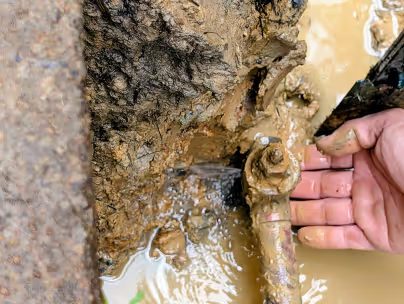
Water is pooling under your sink and you don't know where it's coming from. Or you hear water running inside your walls when all the faucets are off. Maybe your water bill doubled last month for no reason. Plumbing leaks hide in places you can't see and cause damage while you sleep. What starts as a small drip turns into thousands of dollars in water damage if you don't catch it fast.
We find and fix plumbing leaks across Little Rock. From old houses in Hillcrest to new construction in Chenal Valley, we've seen every kind of leak. Our plumbers know how to track down hidden leaks, fix them right the first time, and prevent the damage from getting worse.

Your Local Plumber: Stop the Damage Before It Spreads
Plumbing leaks happen anywhere water moves through your house. Pipes behind walls, under floors, in your attic, buried in your yard. Most leaks start small. A tiny pinhole in a pipe, a loose fitting, a cracked seal. The problem is that small leak keeps running 24 hours a day. Water damages everything it touches.
Pipes leak for different reasons depending on what kind you have. If you live in an older neighborhood like Capitol View or The Heights, you might still have galvanized steel pipes. These rust from the inside out. The rust eats through the pipe wall until water starts seeping out. Copper pipes last longer but they can still develop pinhole leaks, especially if your water is acidic. Joints where pipes connect are weak spots. The solder or fittings can fail over time.
Supply line leaks waste water and cost you money on water bills. Your water meter keeps spinning even when you're not using anything. That leak behind your bathroom wall might waste 30 gallons a day. After a month, you've paid for hundreds of gallons that just soaked into your drywall and insulation.
Drain leaks are different. They don't waste water but they're just as bad. Wastewater leaking under your house creates health problems. It attracts bugs, causes mold, and damages your foundation. In areas like downtown Little Rock where homes sit close together, a sewer leak can even affect your neighbors.
Signs You Need Leak Detection
Your water bill keeps climbing but you're not using more water. You compare bills from the same months in past years and the current one is way higher. This usually means water is leaking somewhere constantly. Even a small leak that runs 24/7 adds up to hundreds or thousands of gallons wasted.
Your water meter doesn't stop moving. Go outside and check your water meter. Make sure nothing in your house is using water. No dishwasher running, no toilets filling, no one showering. If the meter is still spinning or the numbers are still changing, water is going somewhere. You've got a leak.
You hear the sound of running water but can't find the source. Late at night when the house is quiet, you hear water flowing through pipes. You check every faucet, every toilet, every fixture. Everything is off but you still hear it. That sound is water escaping from a pipe somewhere in your walls or under your house.
You see water stains on walls or ceilings. Brown or yellow spots that grow slowly over time. These stains usually show up below bathrooms or near plumbing. By the time the stain appears on your ceiling, water has been leaking above it for a while. The drywall soaked up water until it couldn't hold anymore and the stain broke through.
There are warm spots on your floor for no reason. If you have a slab foundation, hot water line leaks can create warm areas on your floor. You feel the warmth through the tile or carpet. This tells you hot water is leaking under your slab.
Your foundation has cracks or your floors are uneven. Underground leaks can wash away soil under your foundation. This causes the foundation to settle unevenly. You might see new cracks in walls, doors that stick, or floors that slope when they used to be level.
You have wet spots in your yard that won't dry up. Patches of grass that stay soggy days after rain. Green spots that grow faster than the rest of your lawn because they're getting extra water. Puddles that form when it hasn't rained. These point to underground water line leaks.
You smell mold or mildew inside your house. The smell is strongest near certain walls or in certain rooms. You check for obvious water sources but can't find any. Hidden leaks create moisture inside walls where mold grows. The smell is often the first sign you notice.
What Leak Detection Prevents and How It Works
Finding leaks early prevents massive damage. Water leaking inside walls destroys drywall, ruins insulation, and rots wood framing. It creates perfect conditions for mold that makes people sick. The longer a leak runs, the worse the damage gets. Catching it early means less destruction and cheaper repairs.
Leak detection saves you money on water bills. That hidden leak costs you real money every single month. Once we find it and fix it, your bill drops back to normal. We've helped customers save $100 or more per month after finding leaks they didn't know existed.
Underground leak detection saves your yard and foundation. Without detection equipment, finding an underground leak means digging up large sections of your yard hoping to stumble onto the broken pipe. With detection, we pinpoint the leak location. We dig one small hole right where the problem is, fix it, and fill it back in. Your yard doesn't look like a construction zone.
Early detection protects your foundation. Water leaking under your house erodes soil and causes settling. This leads to foundation cracks, wall cracks, and structural problems that cost tens of thousands to repair. Finding and fixing the leak before this happens saves your foundation.
When we detect leaks, we use different tools depending on what we're looking for. For leaks inside walls, we use moisture meters that measure water content in building materials. We can find wet spots behind drywall without cutting holes everywhere. We use infrared cameras that show temperature differences. Wet areas show up cooler than dry areas on the thermal image.
For listening to leaks, we use acoustic detection equipment. Water escaping from a pressurized pipe makes a specific sound. Our equipment amplifies this sound so we can hear it through concrete, dirt, and other materials. We trace along the pipe path listening for the leak signature. When we find it, we mark the exact spot.
For slab leaks under concrete foundations, we sometimes use helium or hydrogen detection. We introduce a safe tracer gas into the water line, then use sensors to detect where the gas escapes through the slab. This pinpoints leaks under concrete without breaking up your floor.
We also do simple tests that catch obvious problems fast. We check your water meter before and after shutting off your main valve. We isolate different sections of plumbing to narrow down where the leak is. We pressure test lines to see if they hold pressure or if it drops, indicating a leak.
What to Expect When You Call for a Plumbing Leak Detection
When you call us about a leak, we ask where you're seeing signs of water. This helps us know what tools to bring. Some leaks are obvious and easy to find. Others need special equipment to locate.
If you have an active leak that's causing damage right now, we walk you through shutting off the water while we're on the way. For a leak under a sink, turn off the valves under that sink. For a bigger leak, shut off your main water line. We get to you as fast as we can.
When we arrive, we inspect the problem area first. If the leak is visible, we can usually fix it quickly. If it's hidden, we use different methods to find it. We might use moisture meters to detect water inside walls. We check your water meter to see if it's spinning when nothing is running. For underground leaks, we use acoustic listening equipment that picks up the sound of water escaping from pipes.
Once we find the leak, we explain what's wrong and what it'll take to fix it. Sometimes we need to cut into drywall to reach a pipe. We make the smallest opening possible to do the repair. We fix the pipe, test it to make sure the leak is completely stopped, then patch the hole we made.
For supply line leaks, we shut off water to that section, cut out the damaged pipe, and replace it. We use the best materials for your situation. We test the repair under pressure before we close everything up. You don't want to fix a wall just to have the pipe leak again.
For drain leaks, we replace the leaking section and make sure it slopes correctly. Drain pipes need the right slope or they'll clog and leak again. We test drain repairs by running water through them and checking for any seepage.
We clean up our work area when we're done. We haul away any damaged pipe or materials. We test everything one more time to be absolutely sure the leak is fixed. We want you confident that the problem is solved, not just patched temporarily.
Why Choose Diamond State Plumbing
We've been fixing plumbing problems across Little Rock long enough to know what matters to homeowners. You want someone who shows up on time, doesn't try to sell you things you don't need, and fixes the problem right the first time.
We handle everything from plumbing repairs to complex remodeling projects. Whether you need emergency plumbing for a burst pipe, drainage service to clear a backed-up sewer line, gas installation service for a new appliance, or leak detection to find a hidden problem, we've done it hundreds of times. We work on water heaters, remodel bathrooms and kitchens, install and repair fixtures, and handle all the general plumbing work that comes up in older homes and new construction alike.
The difference is how we do the work. We show up when we say we will. Monday through Friday, 8am to 5pm, we're available to help. We explain what's wrong in plain language. We don't use scare tactics or push unnecessary repairs. We give you options with honest prices and let you decide what makes sense for your situation and budget.
We've seen what happens when plumbing is done wrong. Leaks that come back, gas lines that aren't safe, remodels that fail inspection. We do things by the book because cutting corners costs you more in the long run. We're licensed for everything we do, including gas work that some plumbers won't touch.
We know Little Rock. We've worked in old houses in Hillcrest with original plumbing and new builds in Chenal Valley. We understand how the local water affects your pipes and fixtures. We know what problems are common in different neighborhoods and what solutions actually work here.
When we finish a job, we clean up. We don't leave a mess for you to deal with. We test everything before we leave. If something isn't right, we make it right. We stand behind our work because we plan to be in business for years to come.
We're not the cheapest plumber you'll find. We charge fair prices for quality work done by experienced plumbers who know what they're doing. The guys who come to your house have been doing this for years, not weeks. They can answer your questions and solve problems on the spot instead of calling someone else for help.
You can call us and talk to someone who actually knows plumbing. We answer our phone. We return calls. We schedule appointments that work for you and we keep them. This isn't complicated, it's just doing business the right way.

Why Local Matters
For Your Plumbing


Why Local Matters
For Your Plumbing
You could call a big national chain. They'll probably charge you more and send someone who doesn't know Little Rock. Local plumbers understand that homes in Pulaski Heights have different plumbing than new builds in West Little Rock. They know which neighborhoods have hard water problems and which areas tend to have foundation shifts that affect plumbing.
When you call a local company, you get someone who answers the phone and can usually tell you right away what's probably happening and when they can get there. No automated system. No waiting on hold for 20 minutes.
Response times are better too. A local plumber is 15 minutes away, not coming from another city. If you've got a burst pipe or sewage backing up, those minutes matter. Plus, local companies know the city inspectors, understand Little Rock's specific codes, and can get permits processed faster. When you need plumbing work done right and done quickly, local is the way to go.
 Licensed, Bonded & Insured
Get In Touch
Have any questions? Contact us today for expert services in Little Rock and neighboring communities. Let us handle your plumbing needs!